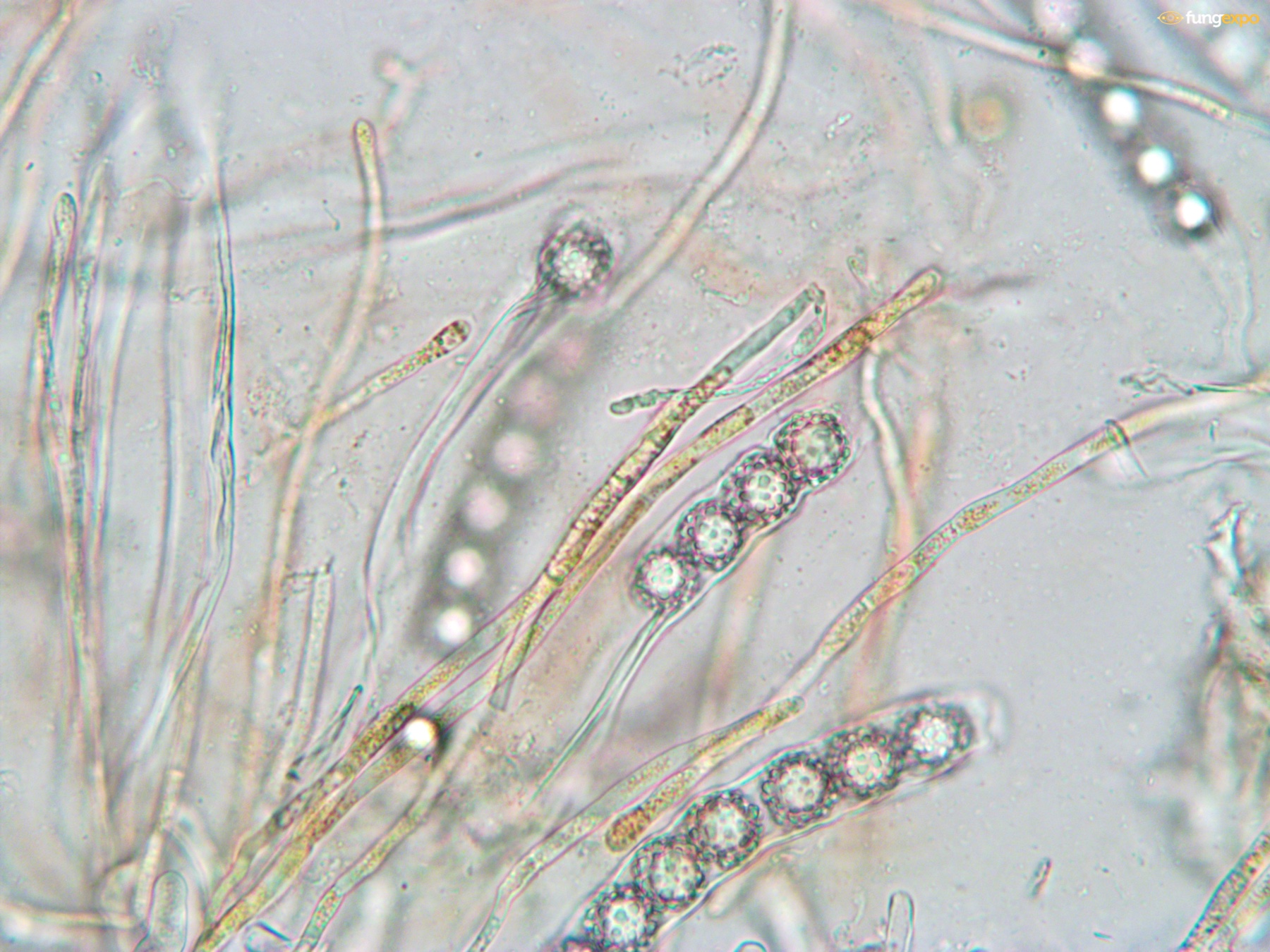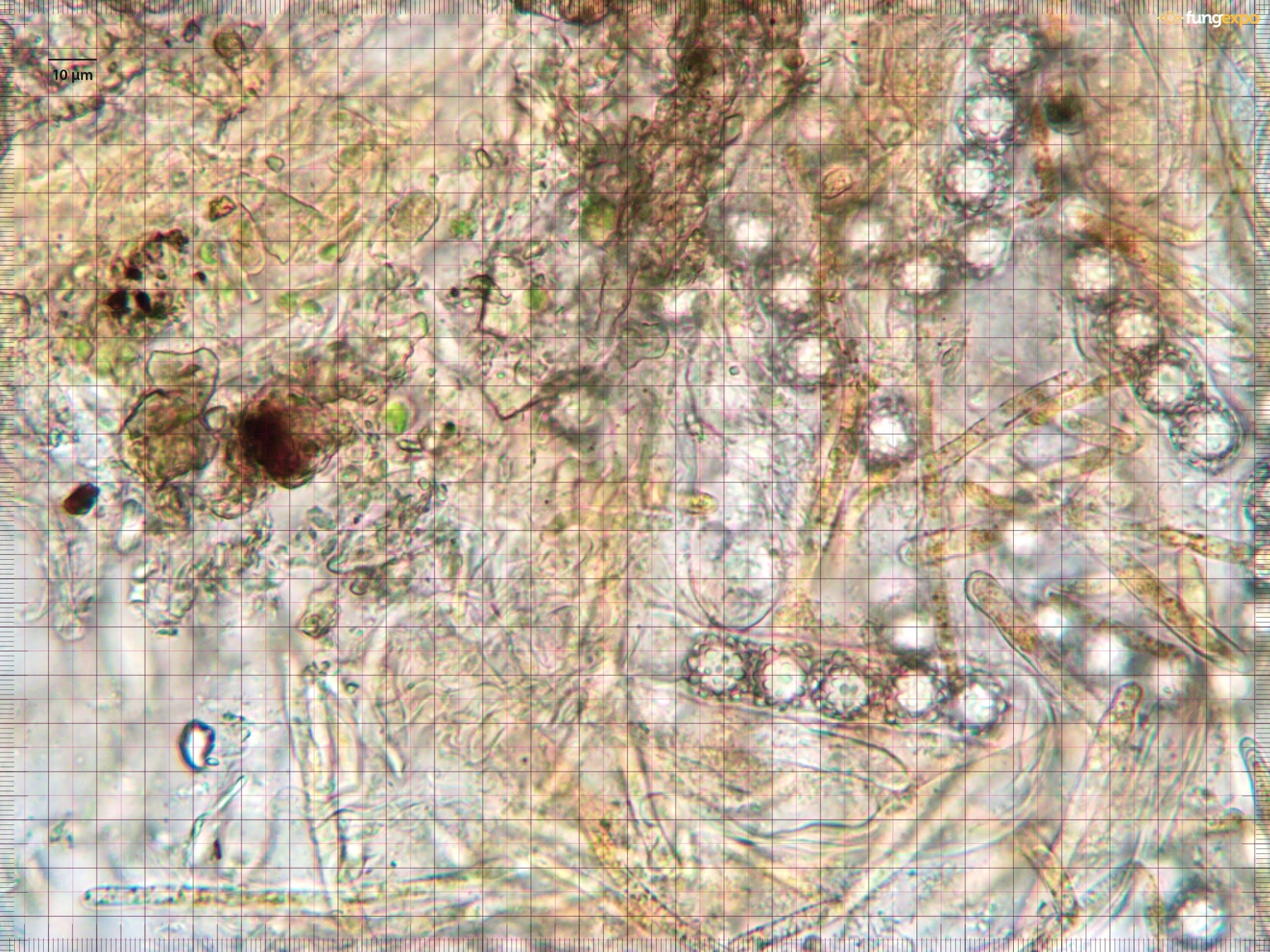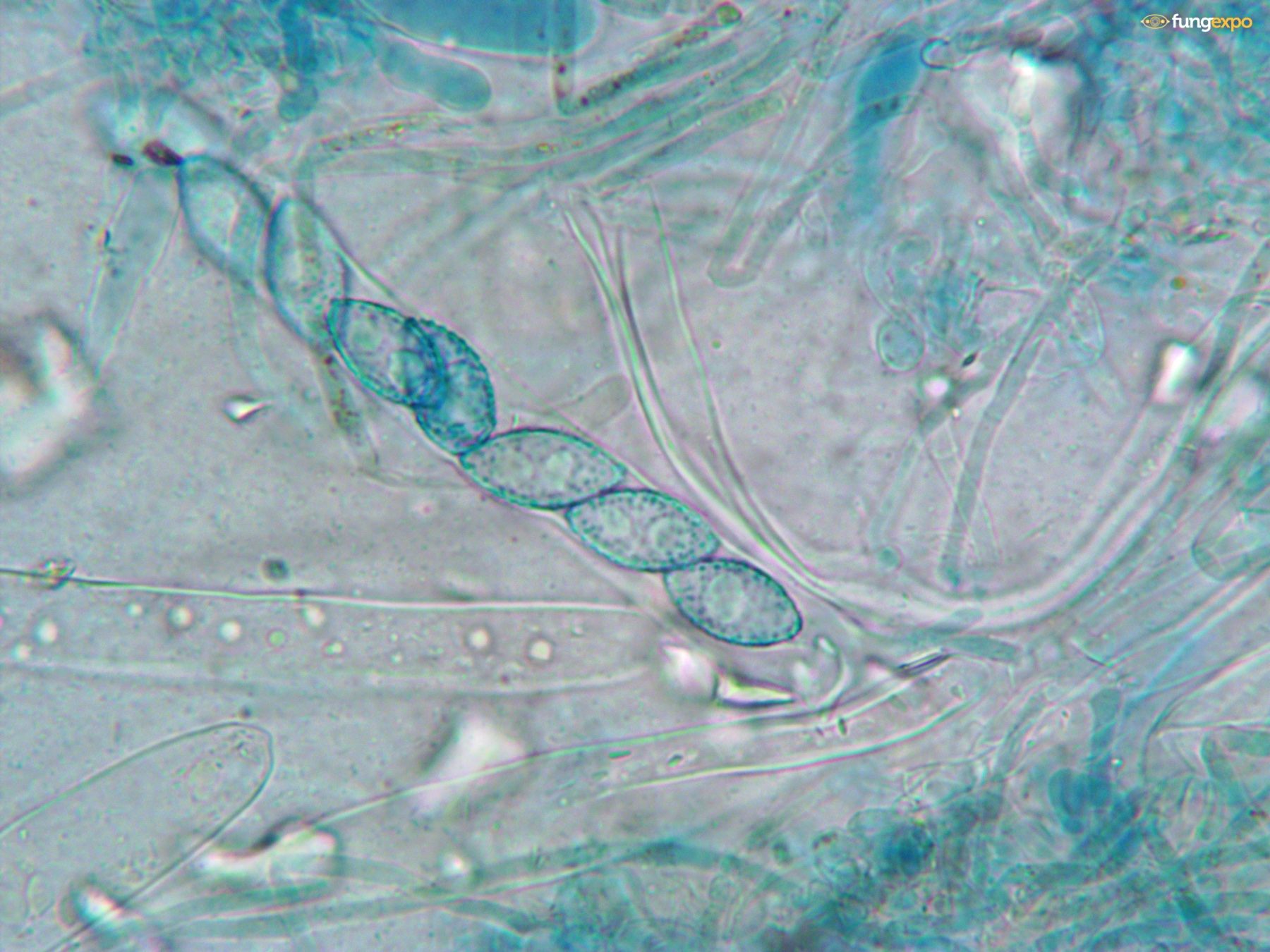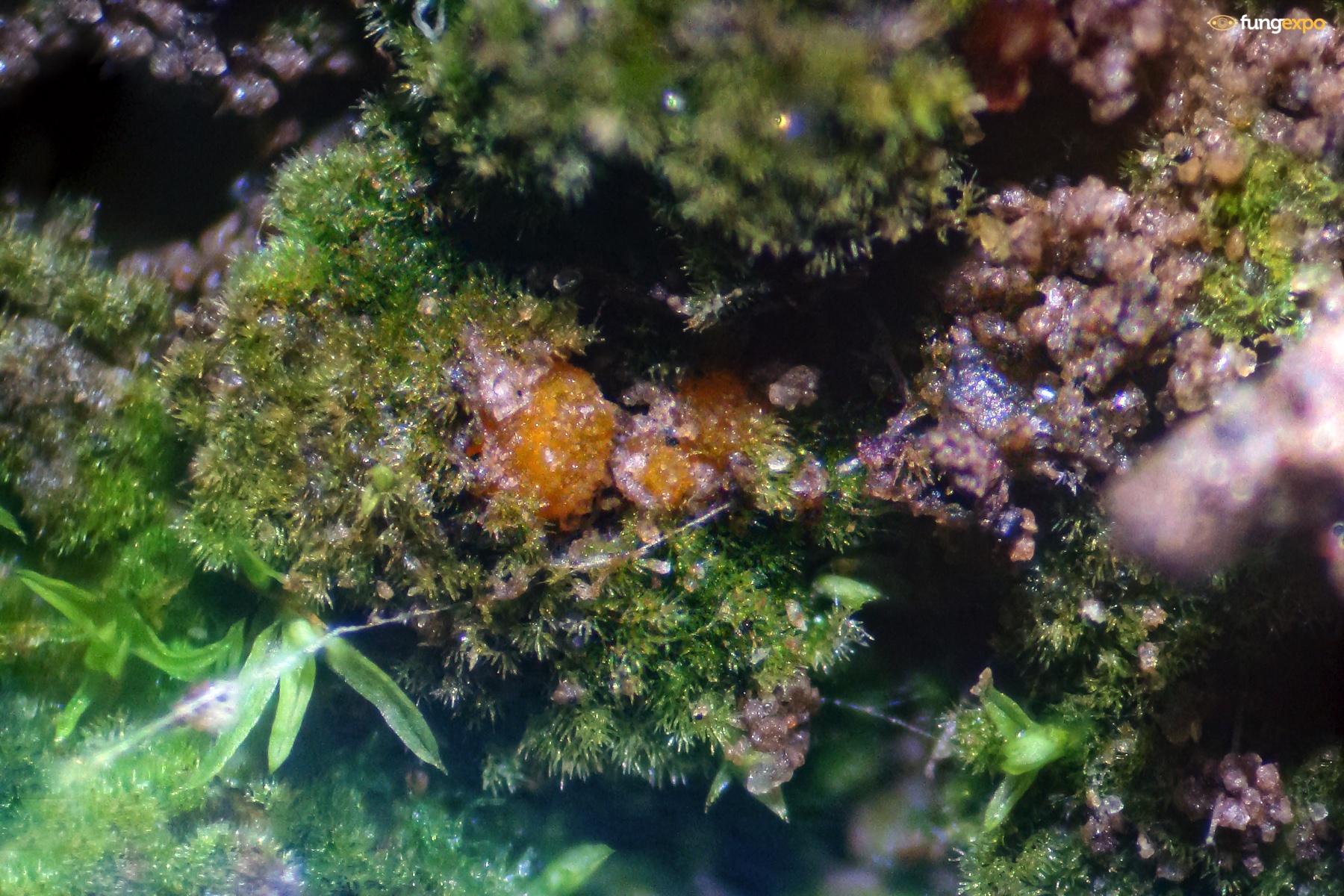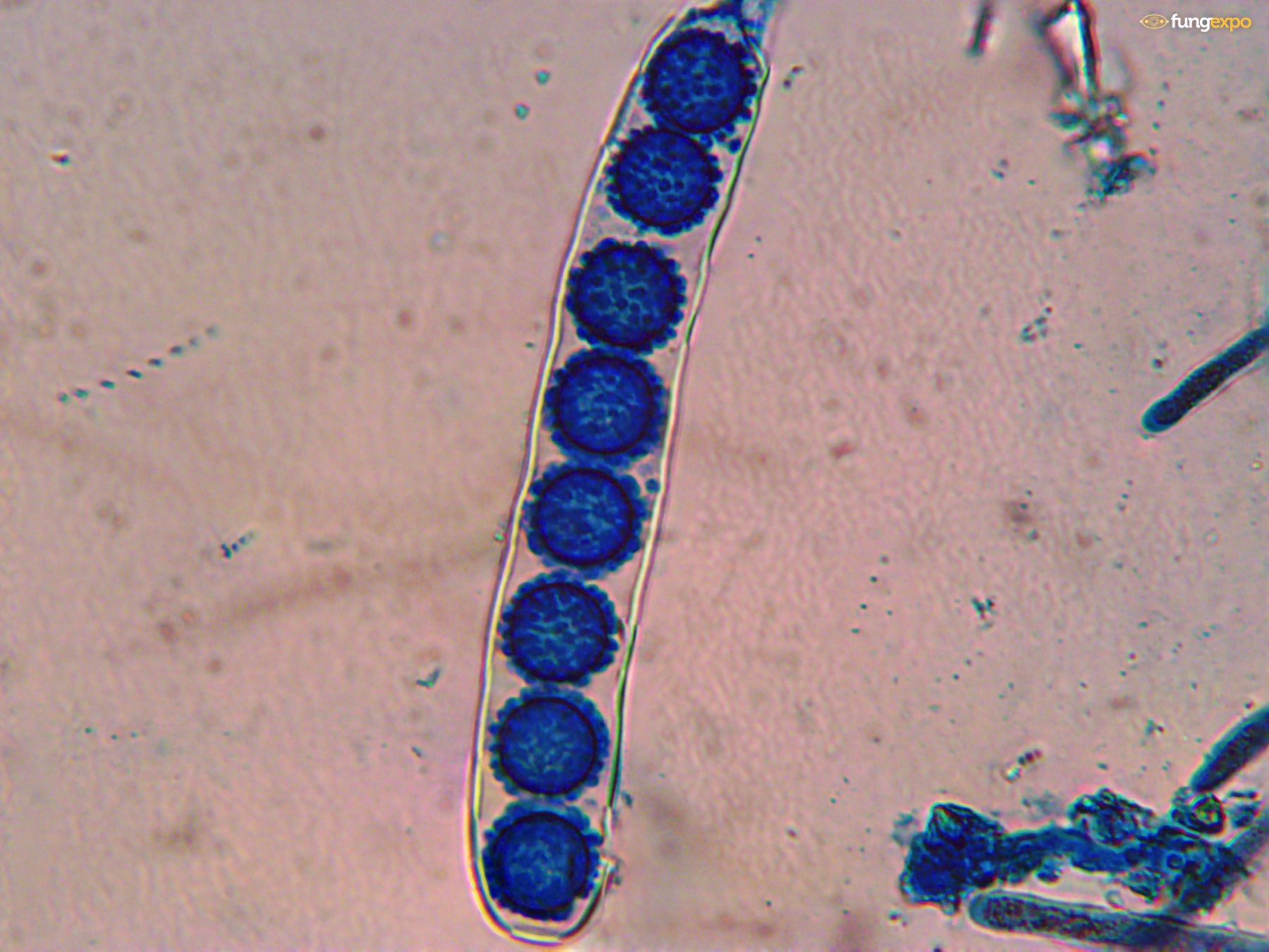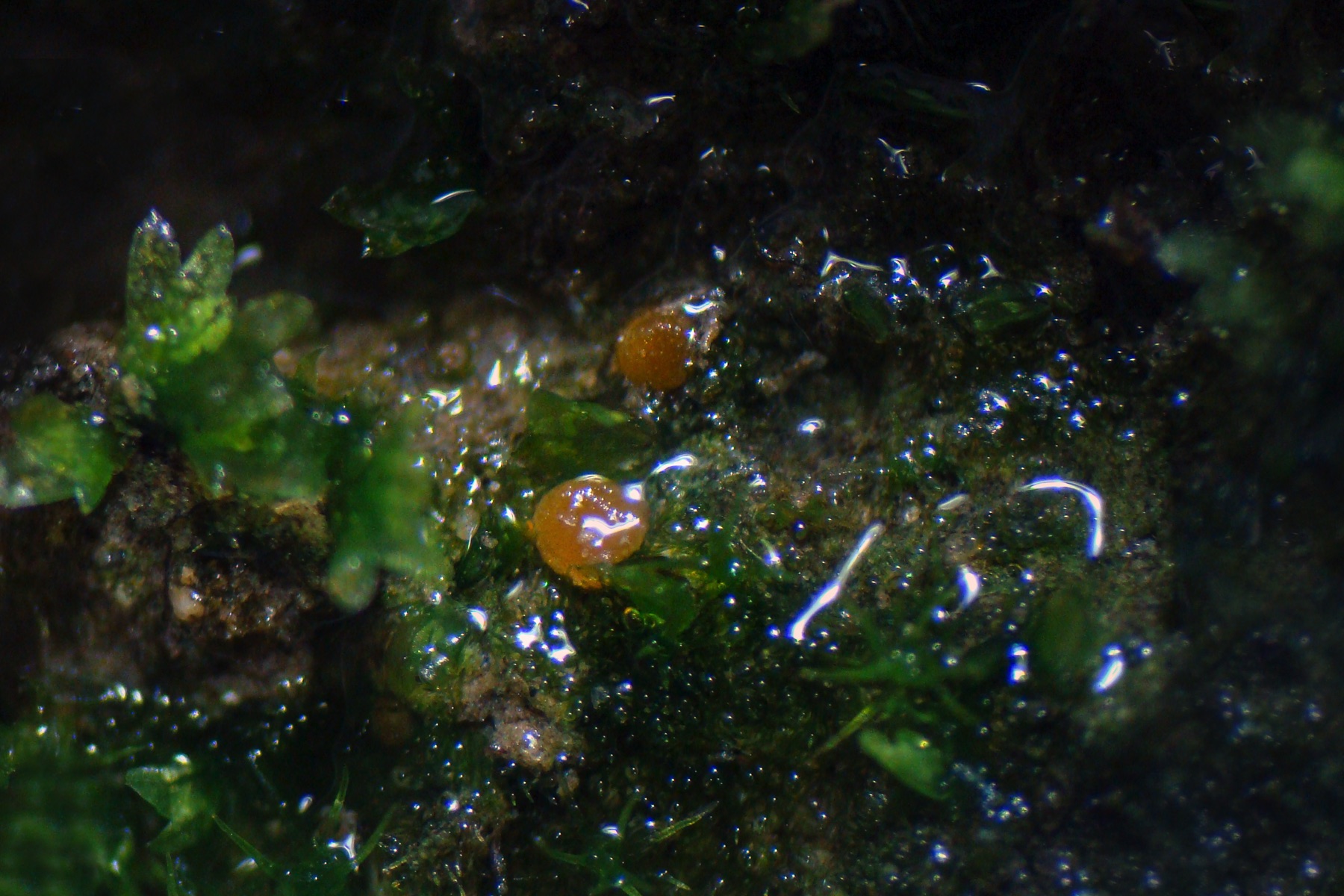
In December 2022, we participated in a fantastic workshop organized by the MMT on bryophyte fungi (led by Dr. Csaba Németh and Attila Koszka). The species identification part of the weekend in Vértes focused on the known domestic representatives of genera such as Octospora, Lamprospora, Bryoscyphus, etc., and we managed to find and examine several of these during the field collections. After returning from the workshop – excited by the realization that it seemed much easier to find bryophyte fungi than we had previously thought – we looked around the mossy areas near our house, and on our first attempt, we collected a Lamprospora species that, to our knowledge (and based on what was discussed at the workshop), had not previously been recorded in Hungary. Although we are still struggling with identifying the moss host independently, the characteristic spore decorations and other microcharacters of the fungus matched those of Lamprospora bulbiformis.
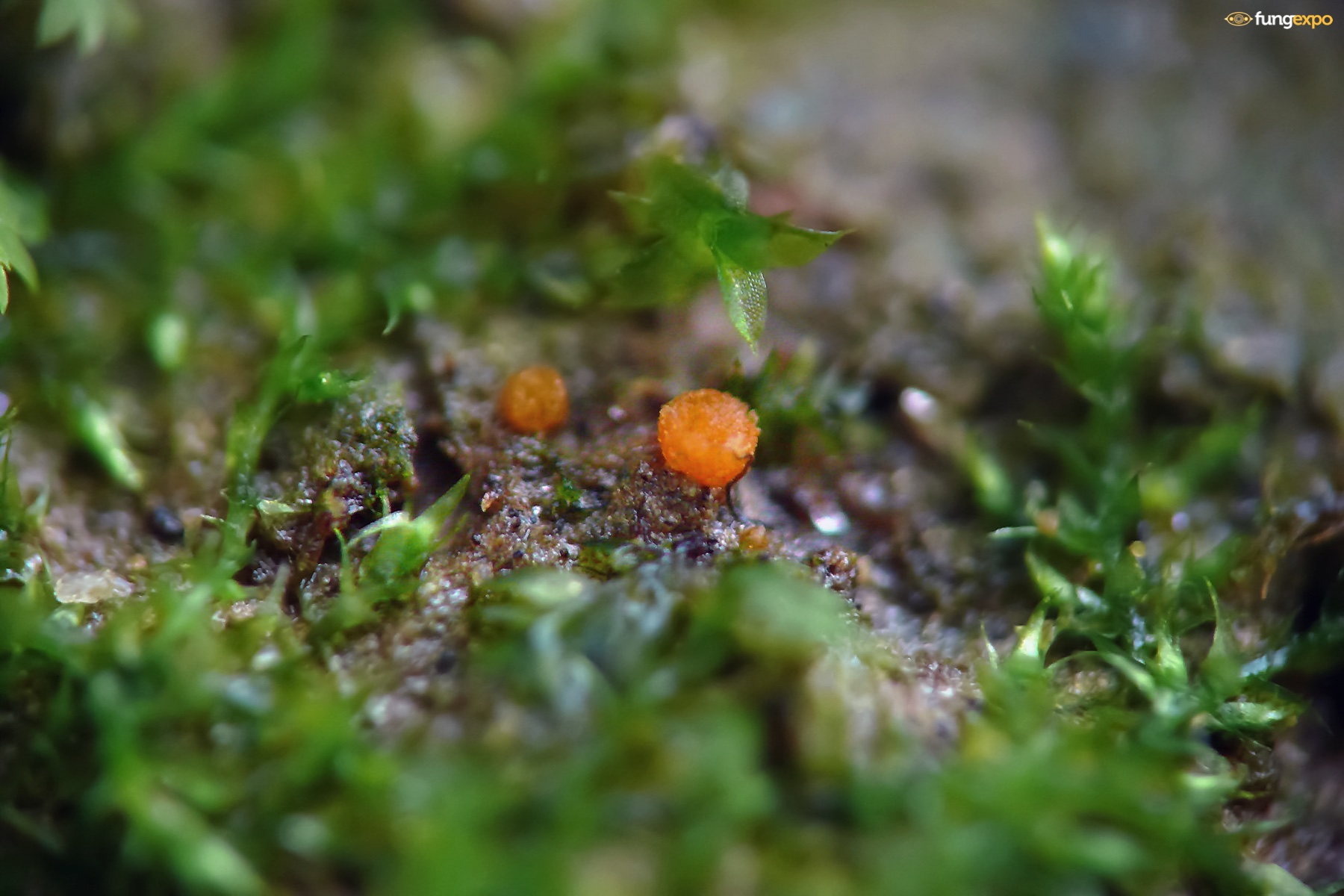
We immediately sent the documentation to Csaba via email, who congratulated us, identified the Fissidens moss host, and requested material for his own analysis. Soon, without a doubt, molecular methods confirmed that we now have one more domestic Lamprospora record, with the addition of bulbiformis.
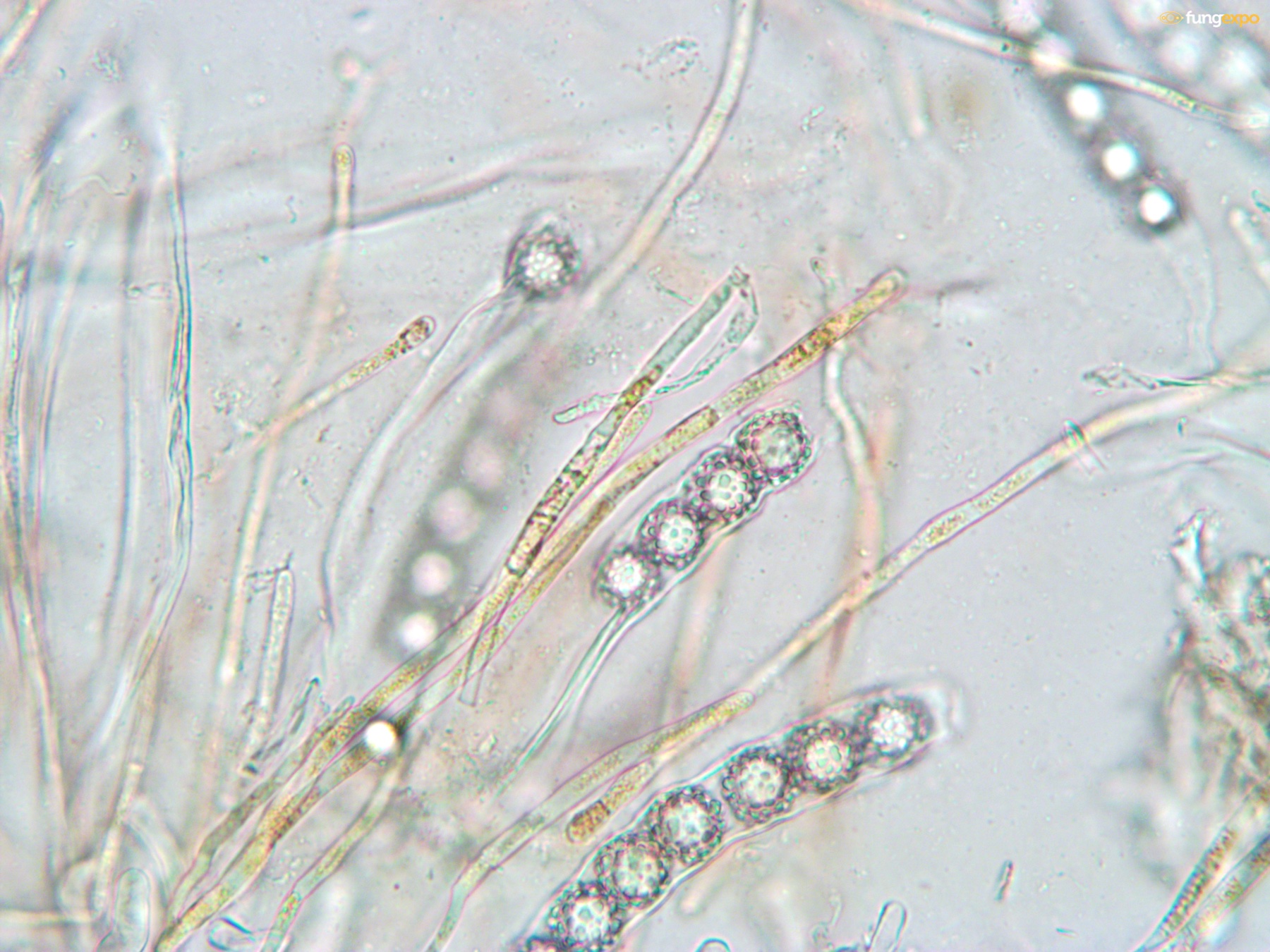
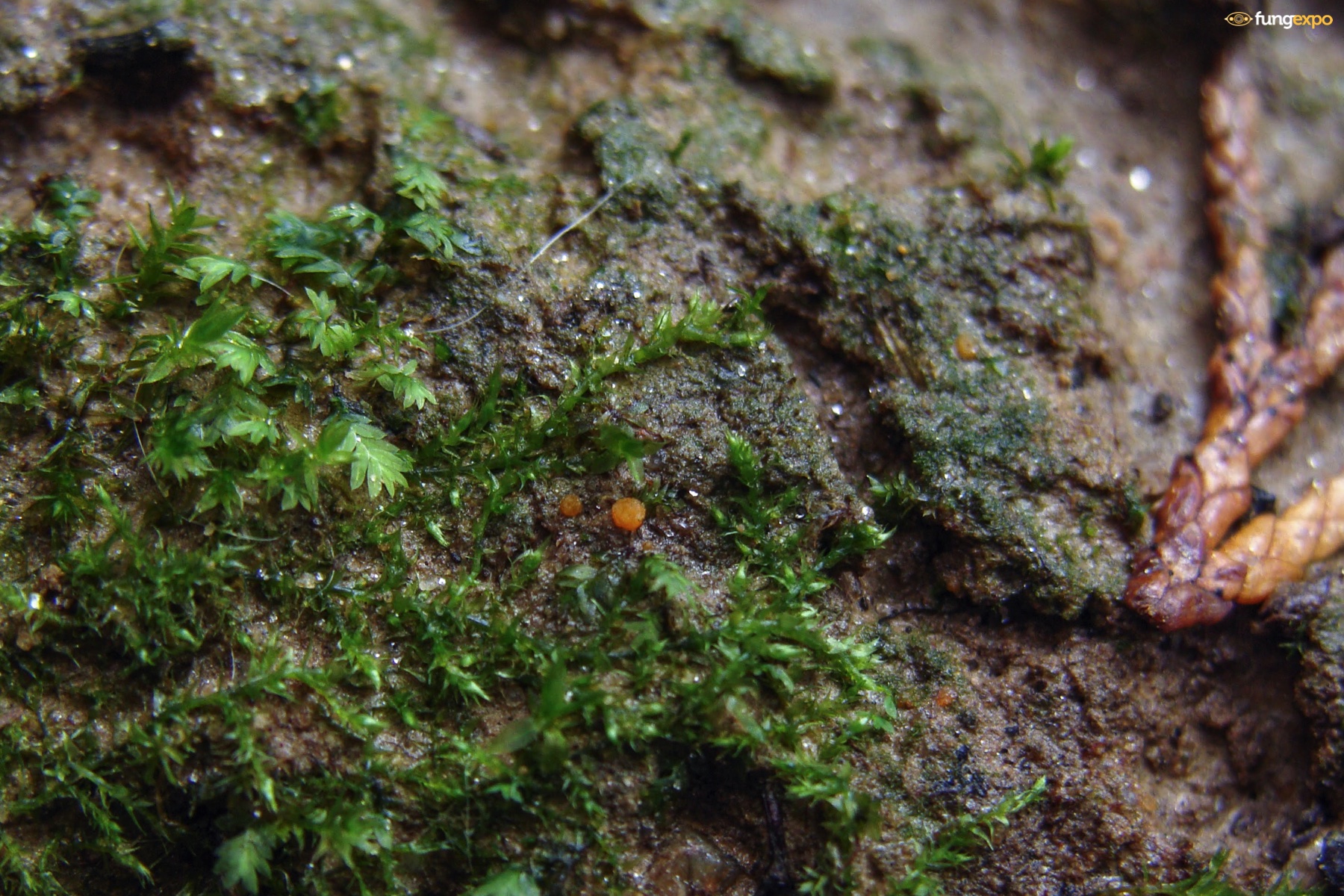
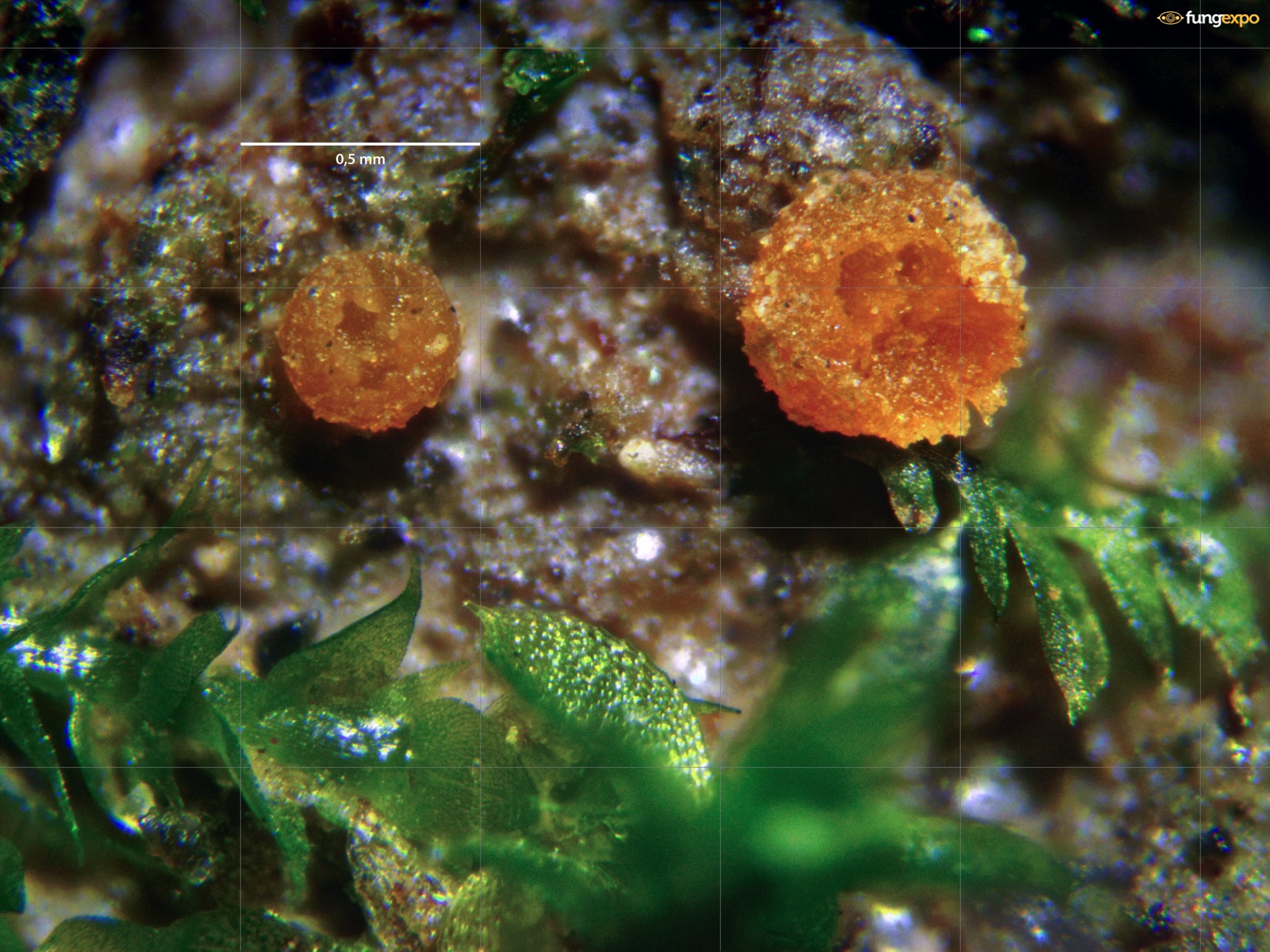
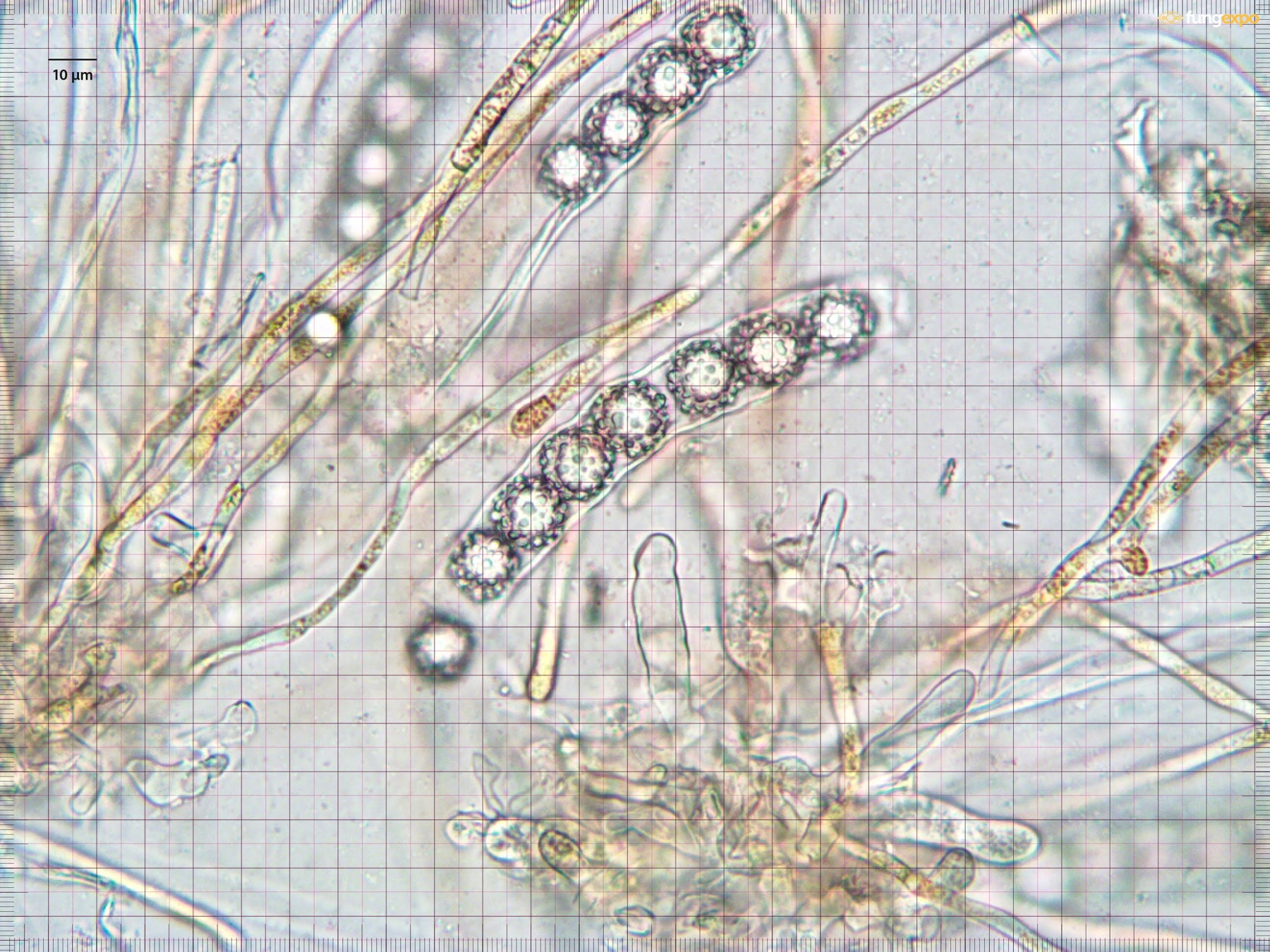
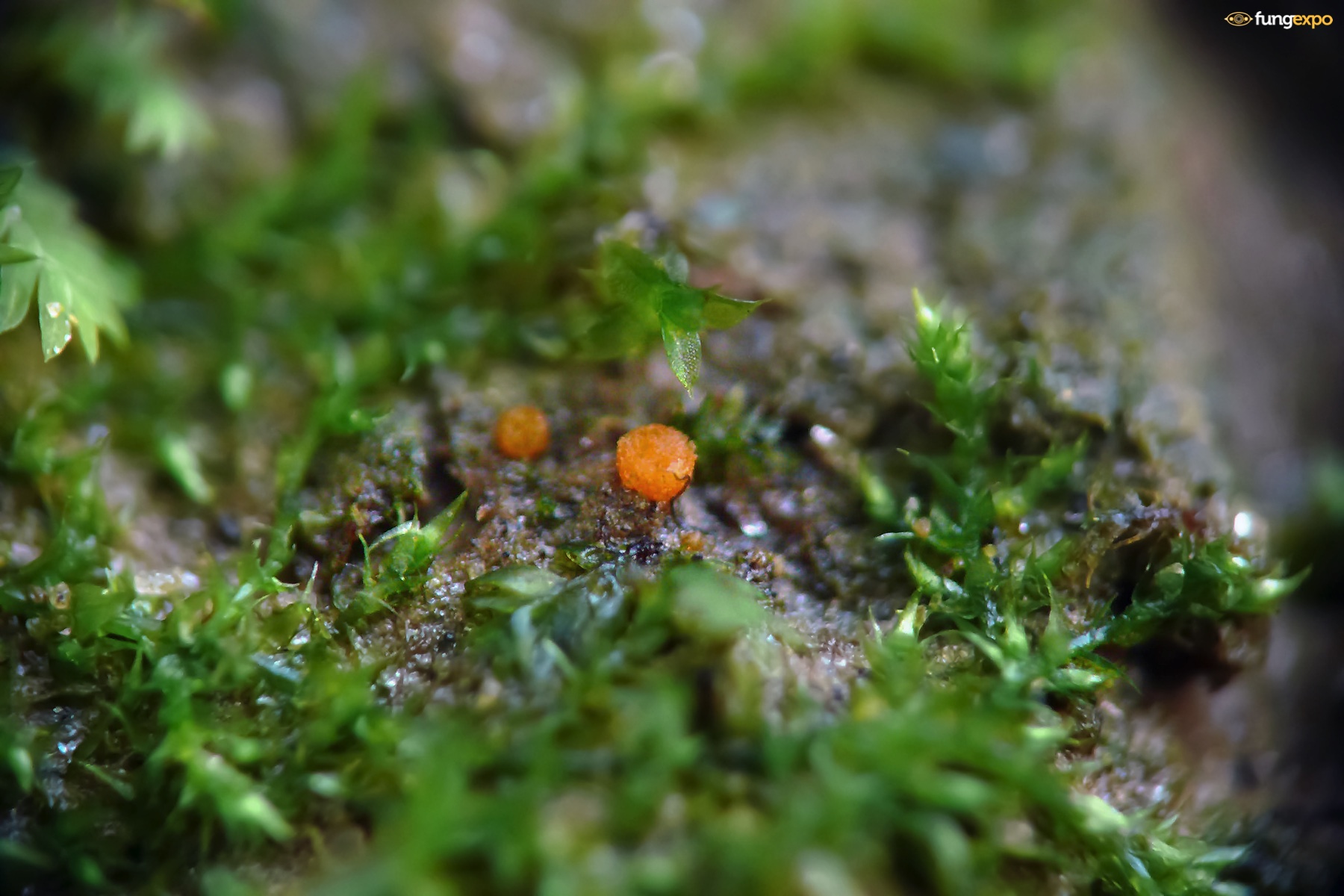
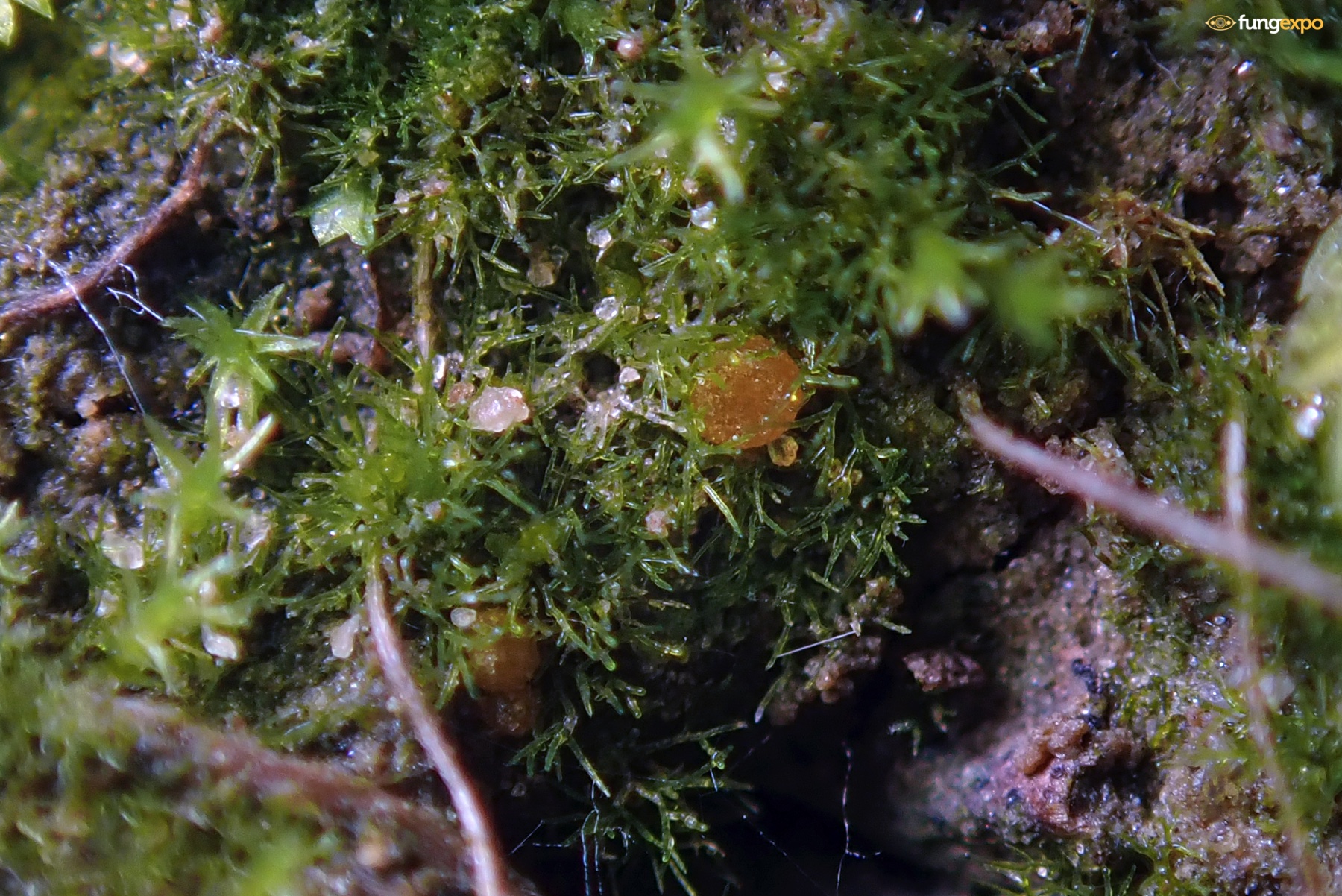
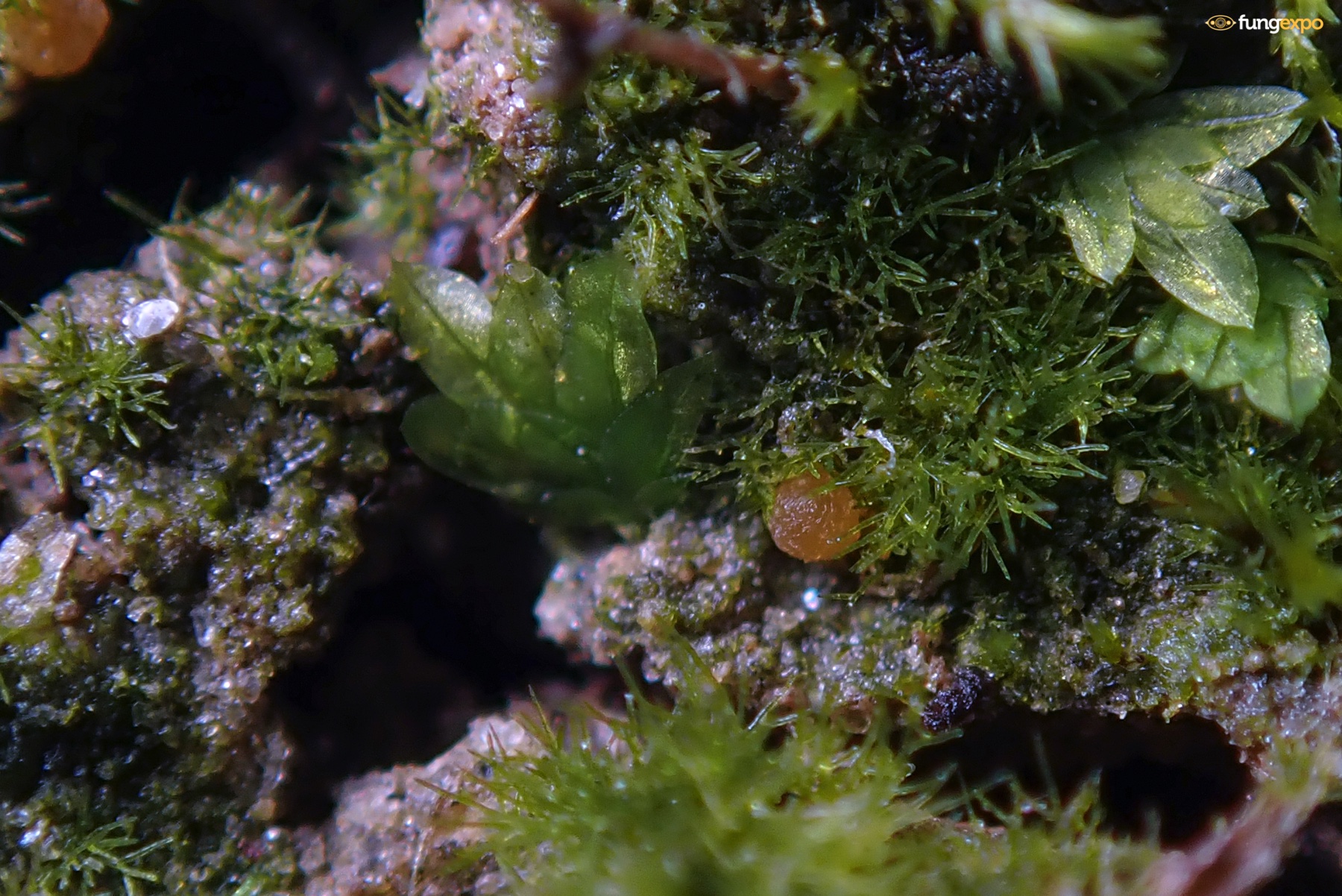
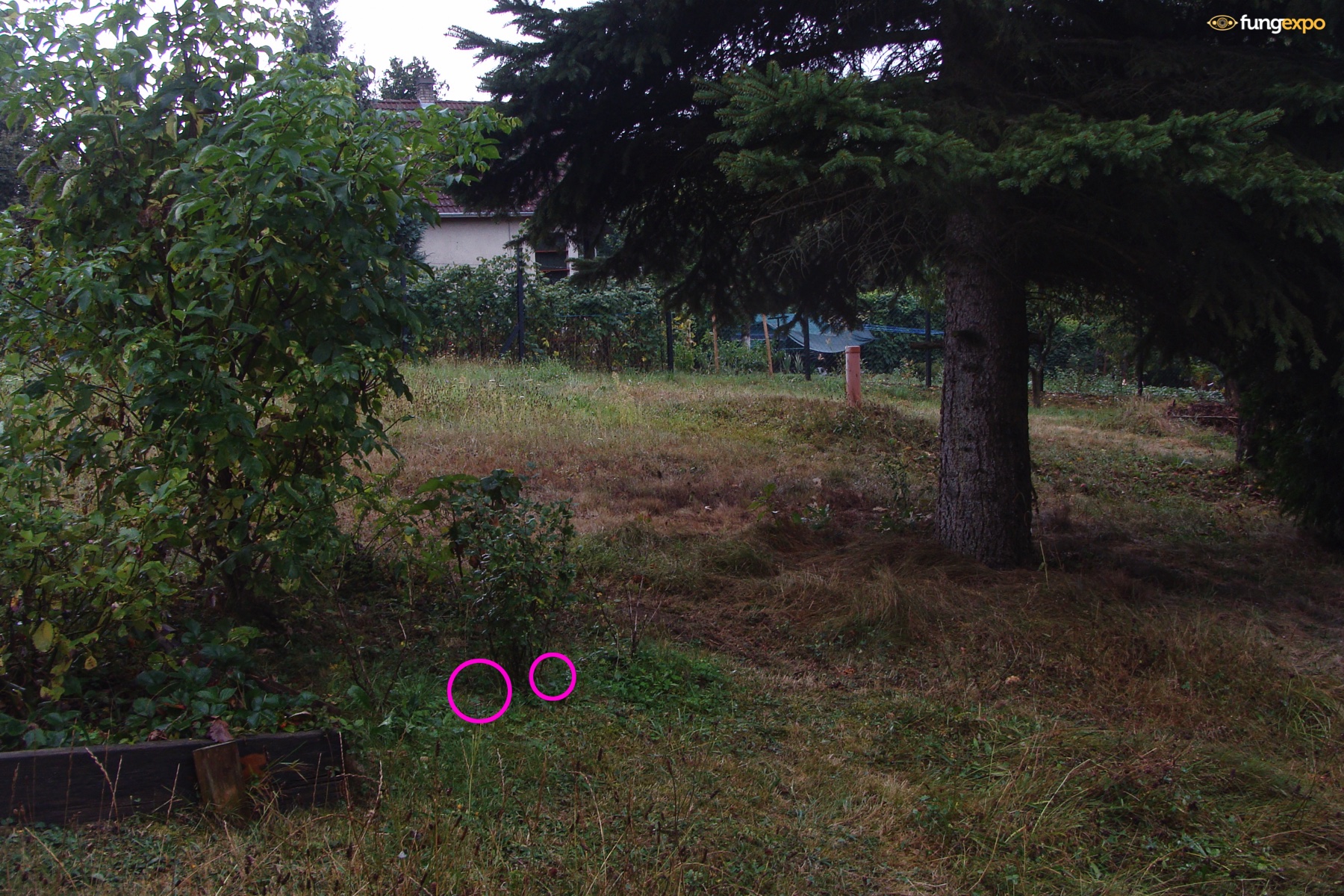
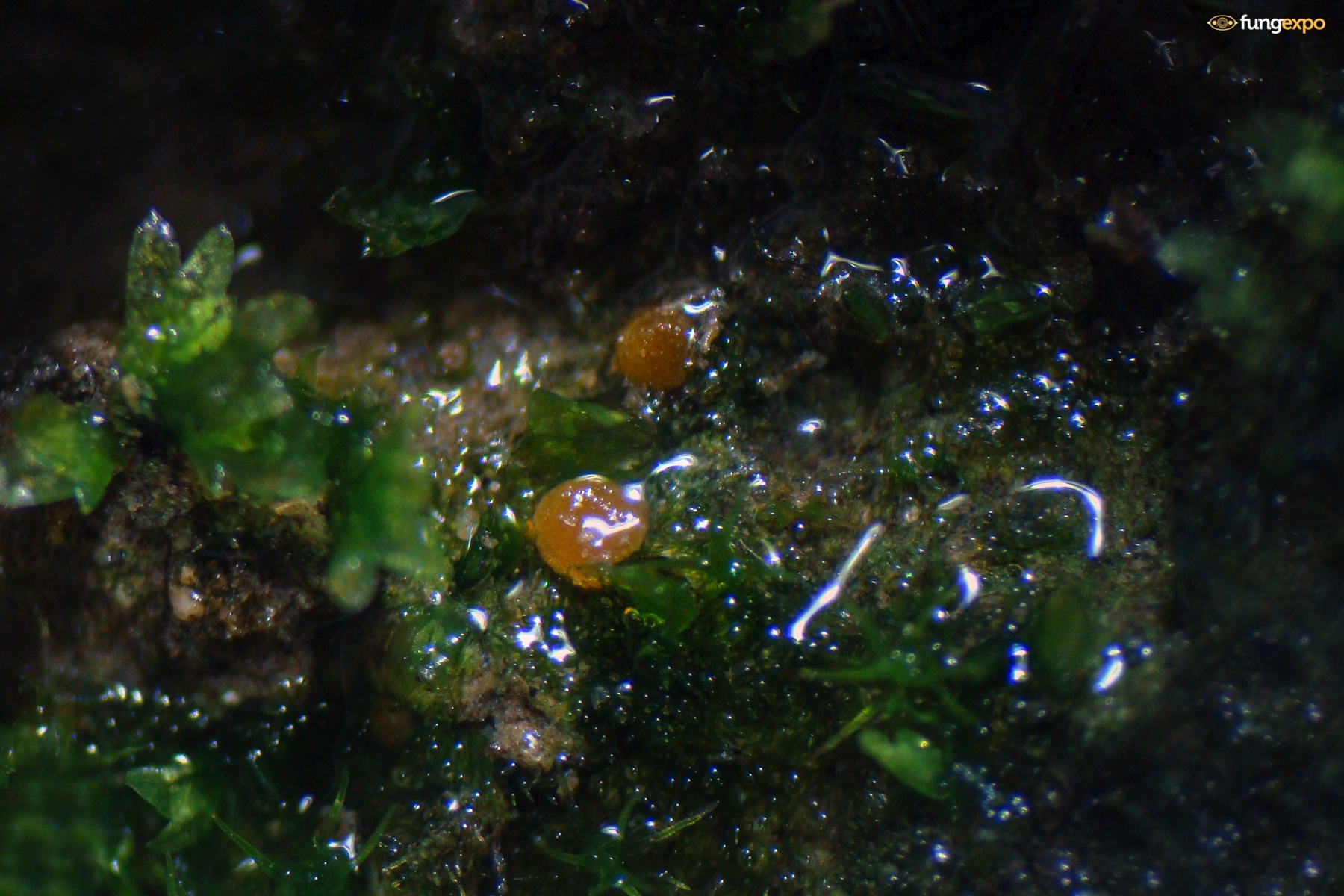
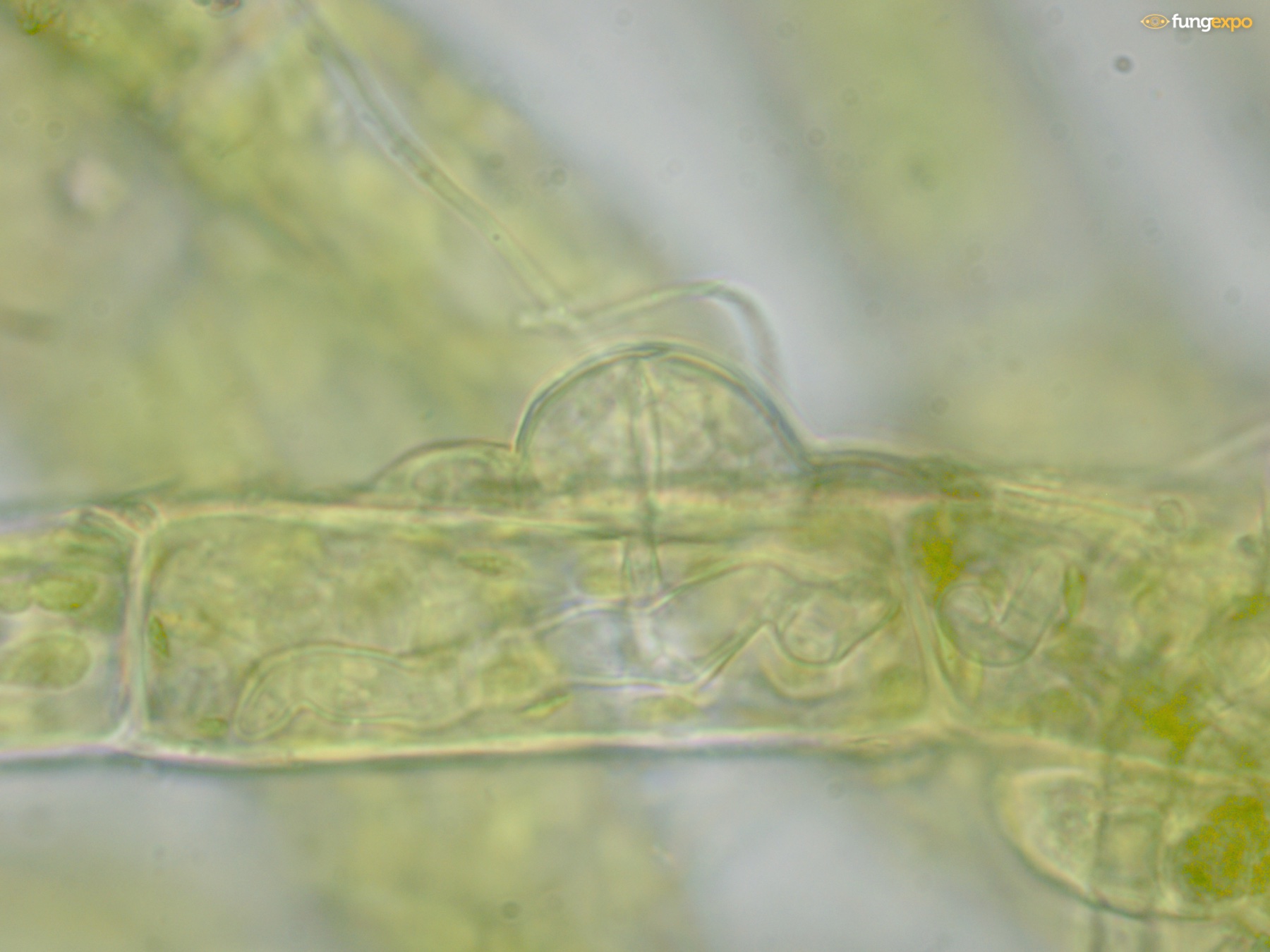
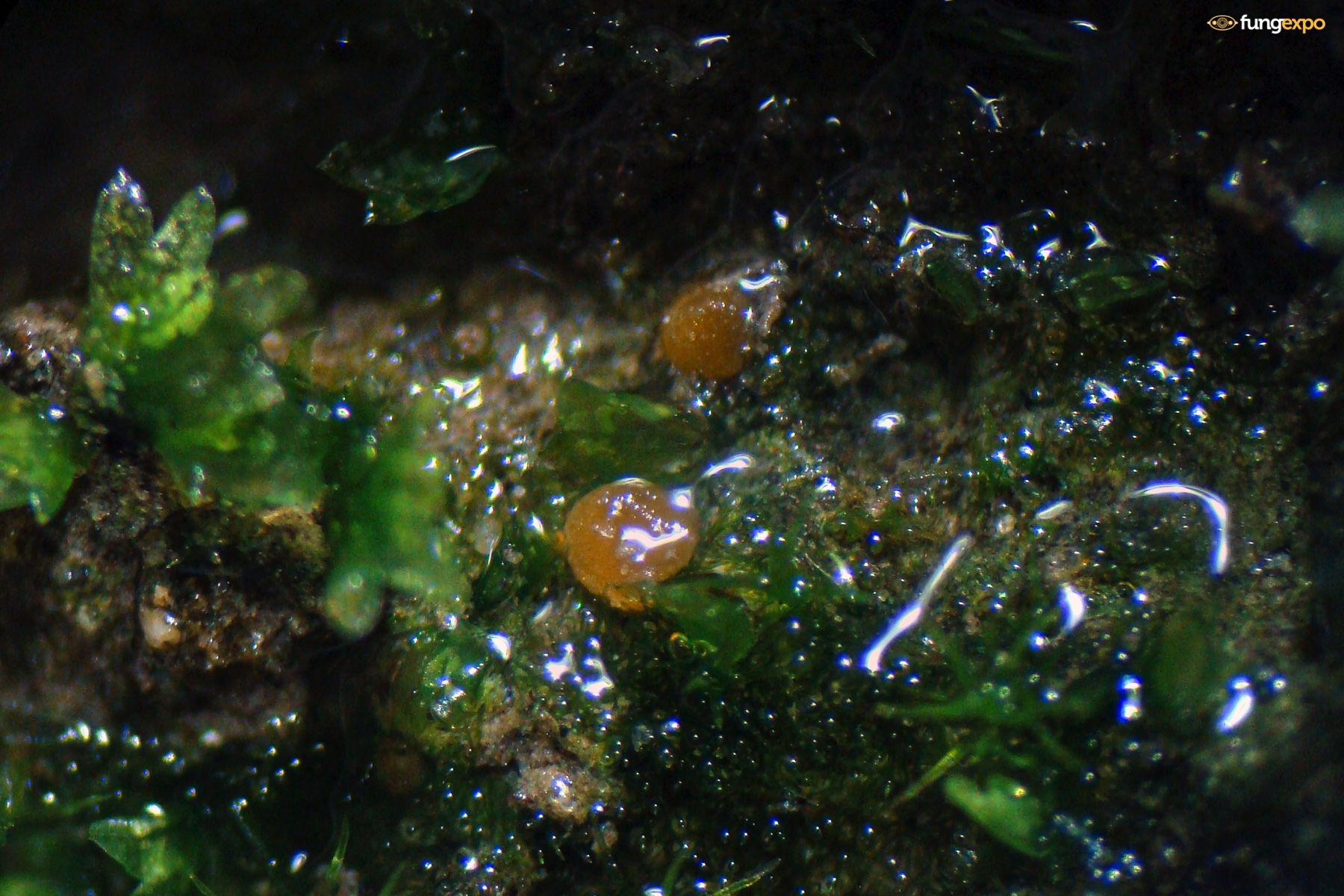
Needless to say, since then, we’ve been keeping an eye on our garden. After registering several common and a few rarer bryophyte species, on August 20th, we found ourselves in the fortunate situation of being able to expand the known list of Octospora species in Hungary by adding Octospora bridei, which associates with Ephemerum species. However, this discovery was a real coincidence. This year, I wanted to expand our Scleroderma photo collection, so I started photographing the false truffles growing in our garden. I noticed the small orange dot in the photo and, hoping it was a bryophyte, I immediately went back to examine it. That’s when I realized from its characteristic warted, spindle-shaped spores that it was likely O. bridei. A week later, Csaba sent the good news that, based on his analysis, our identification was correct: it was confirmed that the fungus’s infection apparatus (penetrating structures) affects the Ephemerum moss species, not the Fissidens growing nearby.
September 2024 marked roughly the turning point. After the hot, dry summer, this was when the forest’s macrofungal diversity started becoming exciting again. This also means that from now on, we’ll have less time for bryophytes, but on September 24th, we still managed to document Octospora tuberculatella from our garden, marking the fifth recorded occurrence of the species in Hungary. As a closing thought, it’s worth noting that our example shows how beneficial such educational workshops can be. Since we’re living in a time of taxonomic revolution, it’s always possible that we’ll stumble upon a new species or even an undiscovered one. However, for this, it’s essential that we’re able to recognize the value of these findings!
A Selection of Rarer Bryophyte Species from Our Garden – 2022–2024, Döröske