A few years ago, around 2017, we started getting involved with fungus. Mostly without any prior background. When this comes up, people sometimes ask why. Where did the interest come from? I try to answer with something reasonable, but to be honest, I don’t really know the answer. When we’re hungry, we eat (if we’re lucky). We get hungry because our bodies need nourishment. It was something like that when we were walking through the forest, and somehow, the hunger to learn about the mushrooms we saw was already there with us. But where exactly did this hunger come from? Maybe it doesn’t matter: it came, and that’s it.

The path towards understanding something is always exciting. This journey into mycology is no different, and it has many accompanying benefits. New skills develop within us, relationships and friendships are formed, communities are shaped, and we get to know truly wonderful places and the symbiotic organisms associated with fungi – along with the web of connections that works between them. It’s also interesting how, at different stages of fungal knowledge, the methodological assistance needed varies so much. At first, a collecting basket and a field guide bought at a bookstore are enough. Later, everything starts to turn upside down. We begin examining under the microscope, browsing through scientific articles and monographs, and are amazed as the gradually increasing genetic data transforms the previously known landscape of taxonomy. It’s like when, in a novel, hidden family ties among the characters are revealed… But beyond all the technicalities, mushroom as a form is also, to me, an aesthetic.
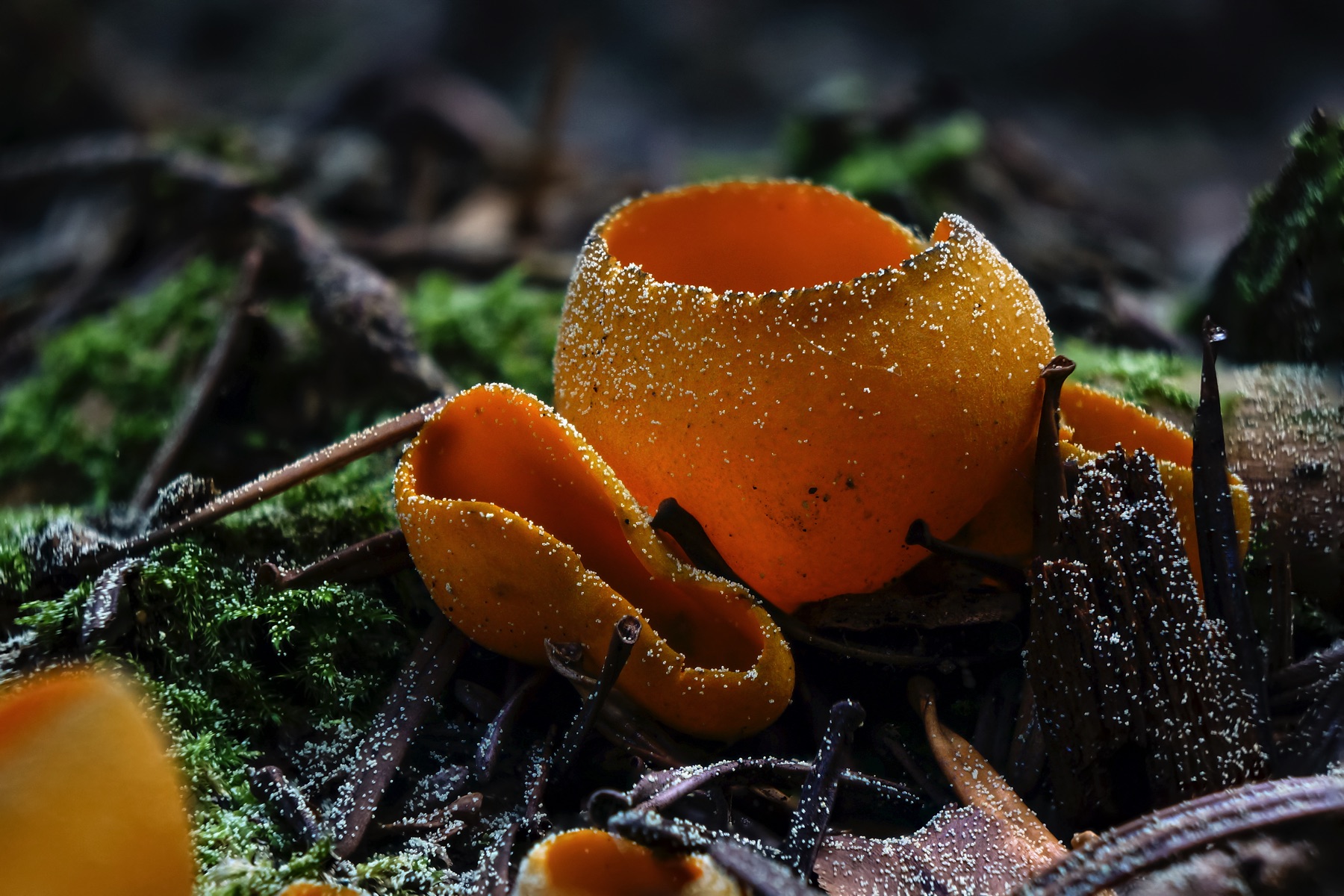
Discovery is exciting, and discovery is joy. That joy becomes more lasting when it can be shared with others. The knowledge gained also means something when it helps others. From this thought, for me, it was a straight path to upload a photographic summary of our journey so far in the form of a public website. These (so far) eight years have left behind a lot of experience and many beautiful memories. It might be worth extending this memory a little. And I think there could be a station within the aforementioned stages of fungal knowledge where fungexpo can also be used as a methodological aid.
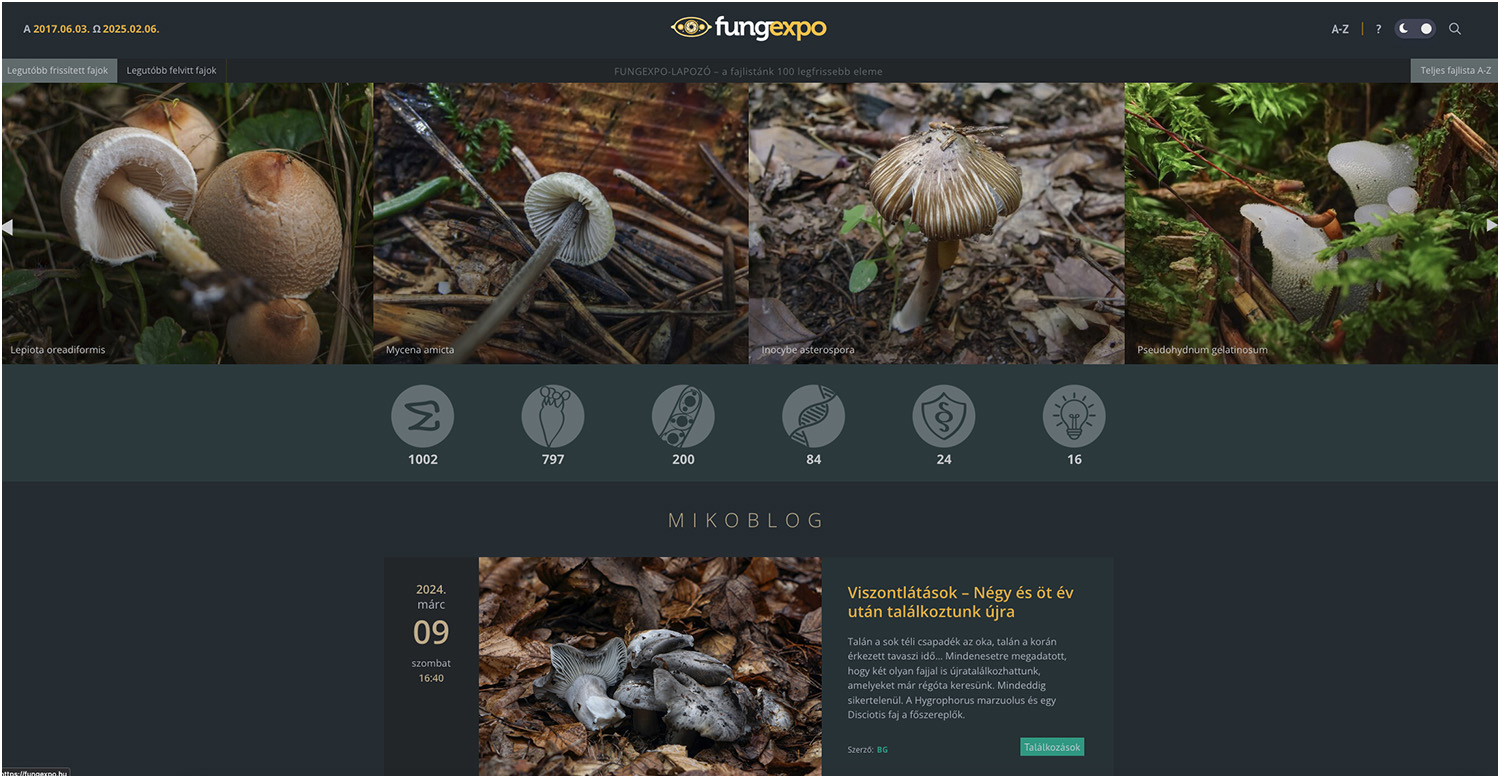
In addition to the fact that the first 1000 species we’ve encountered are now available for browsing online, I’ve tried to do everything I can to make this relatively large database as easy to manage as possible. The data that are related to each other should be interconnected, and those that aren’t should be separated. This is where we are so far. According to my plans, there will be more to come. With this, I hereby open fungexpo :)