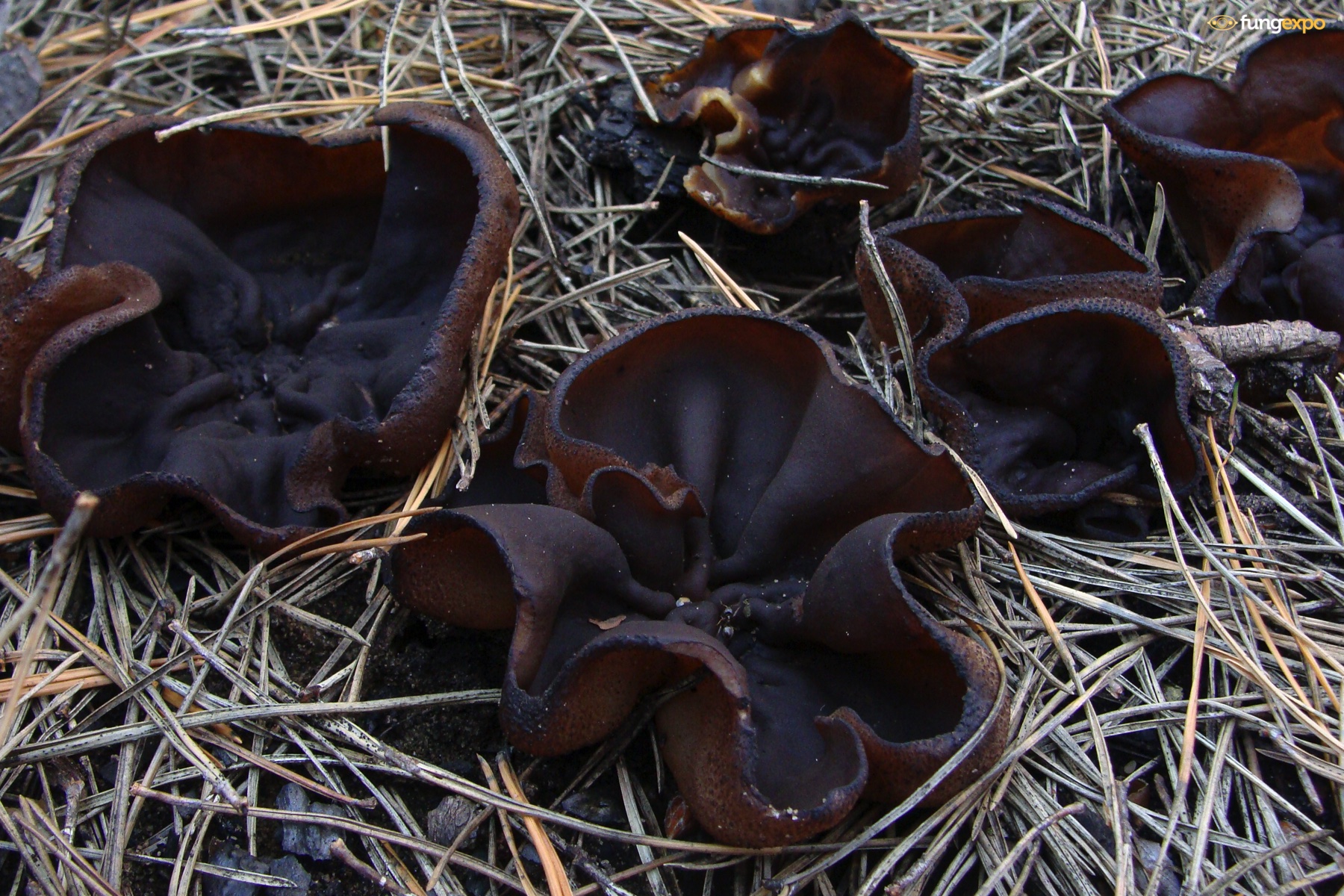
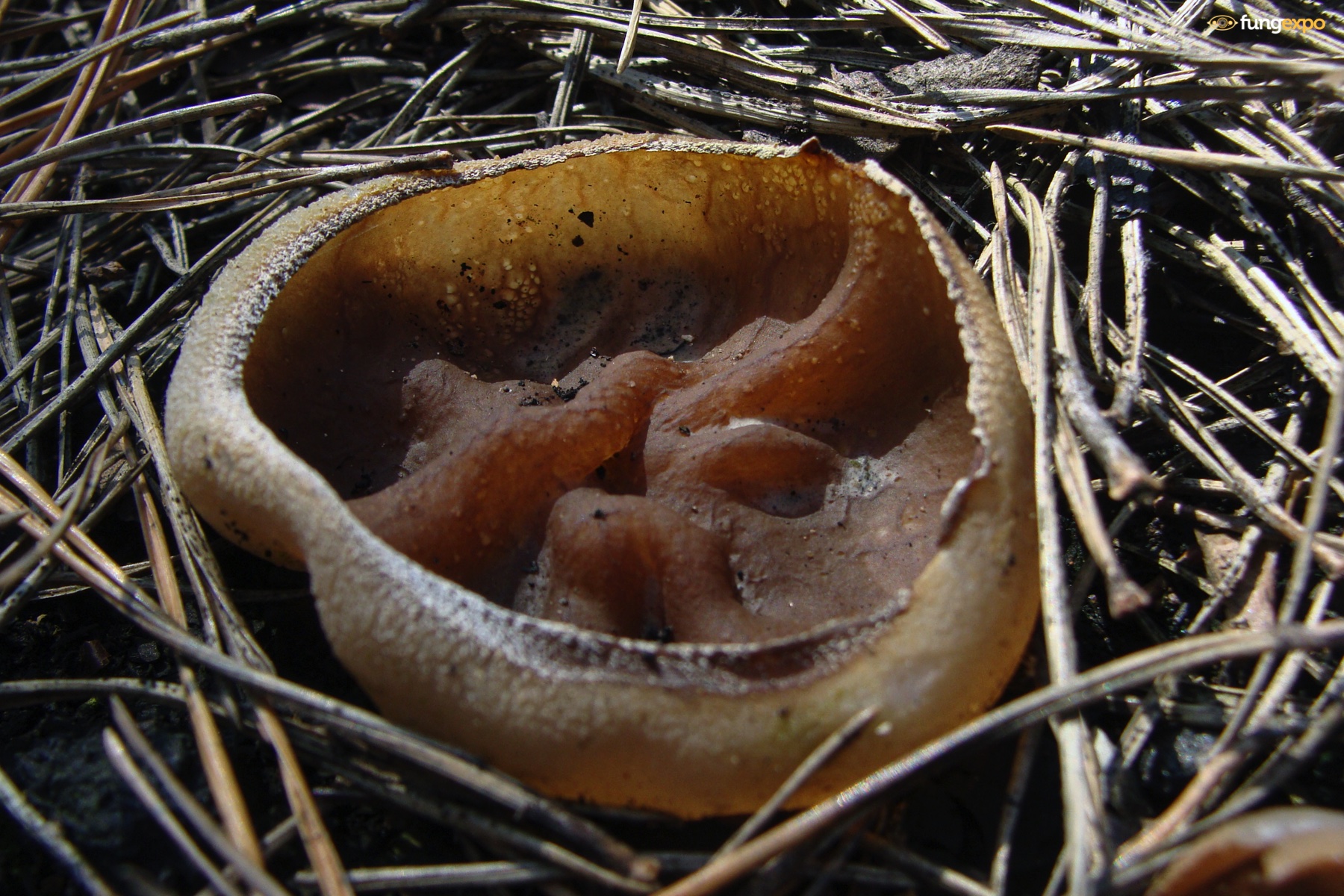
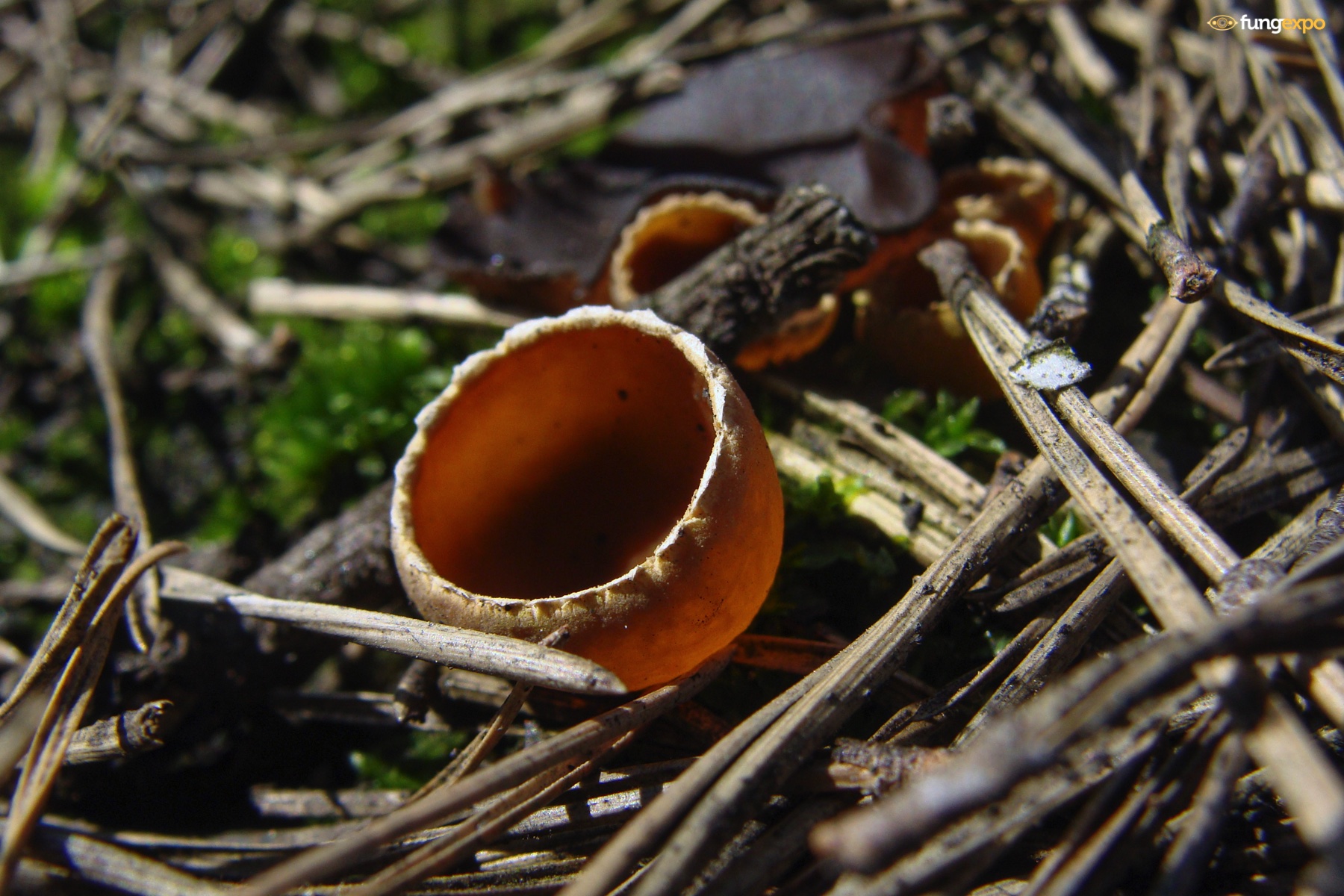
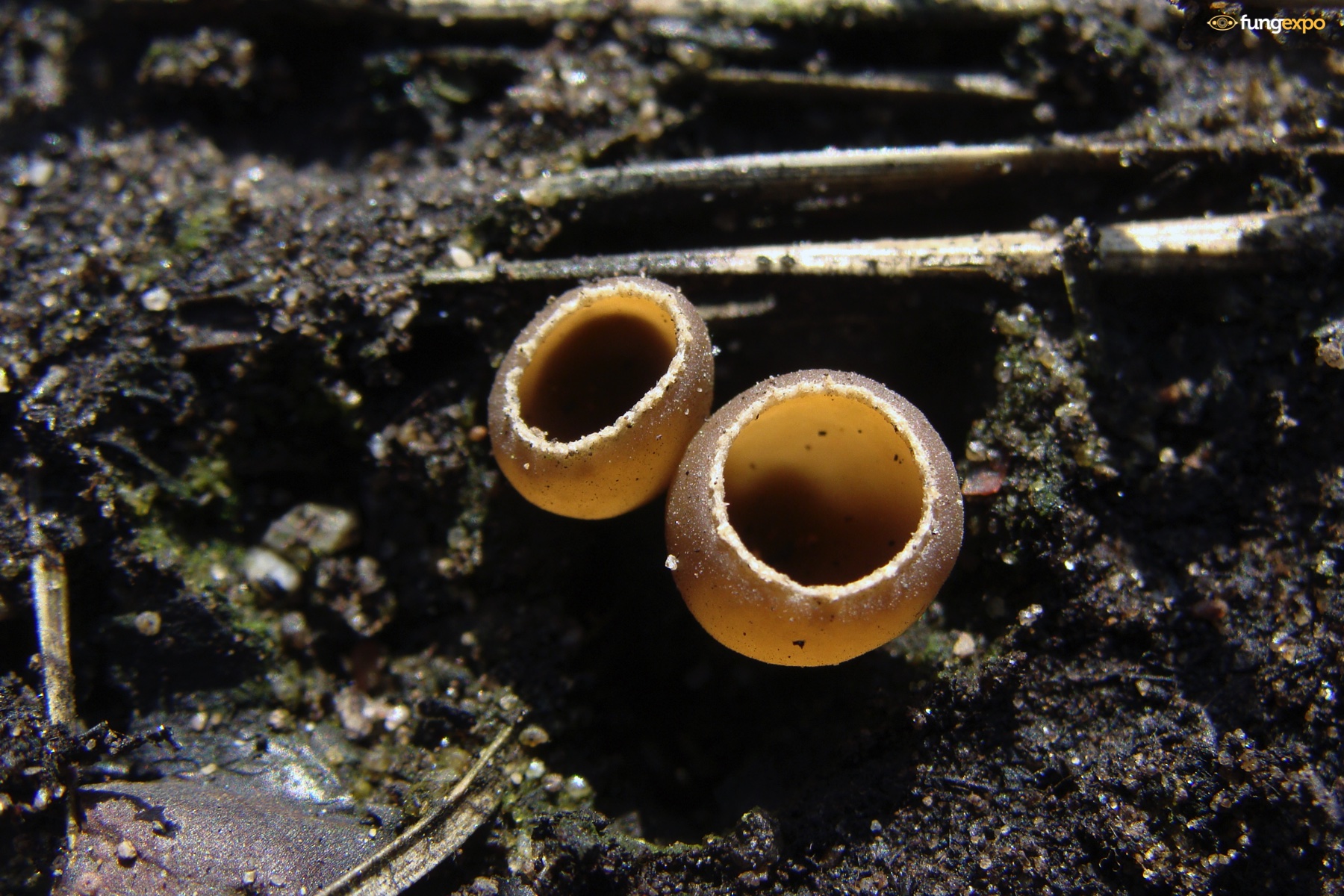
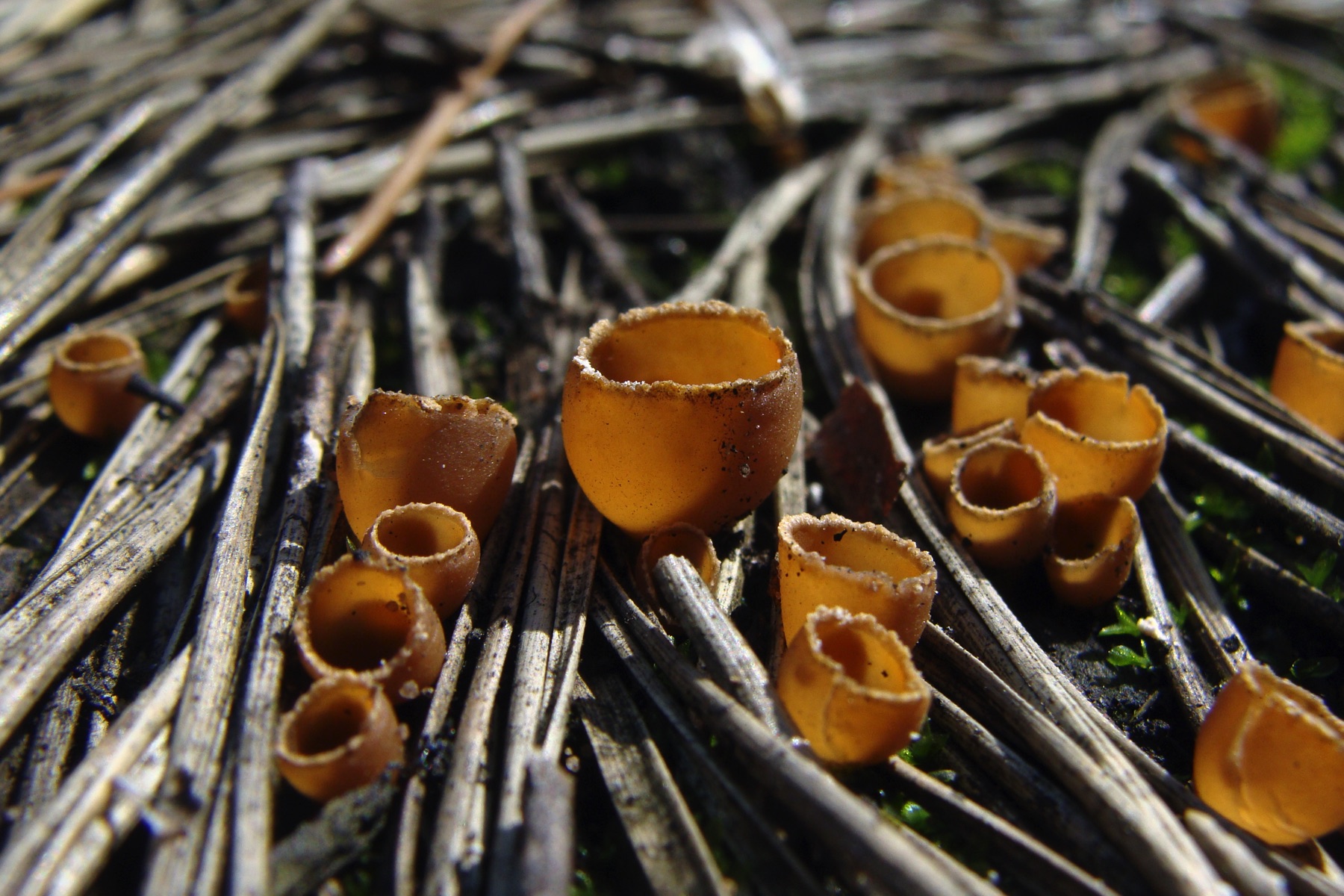
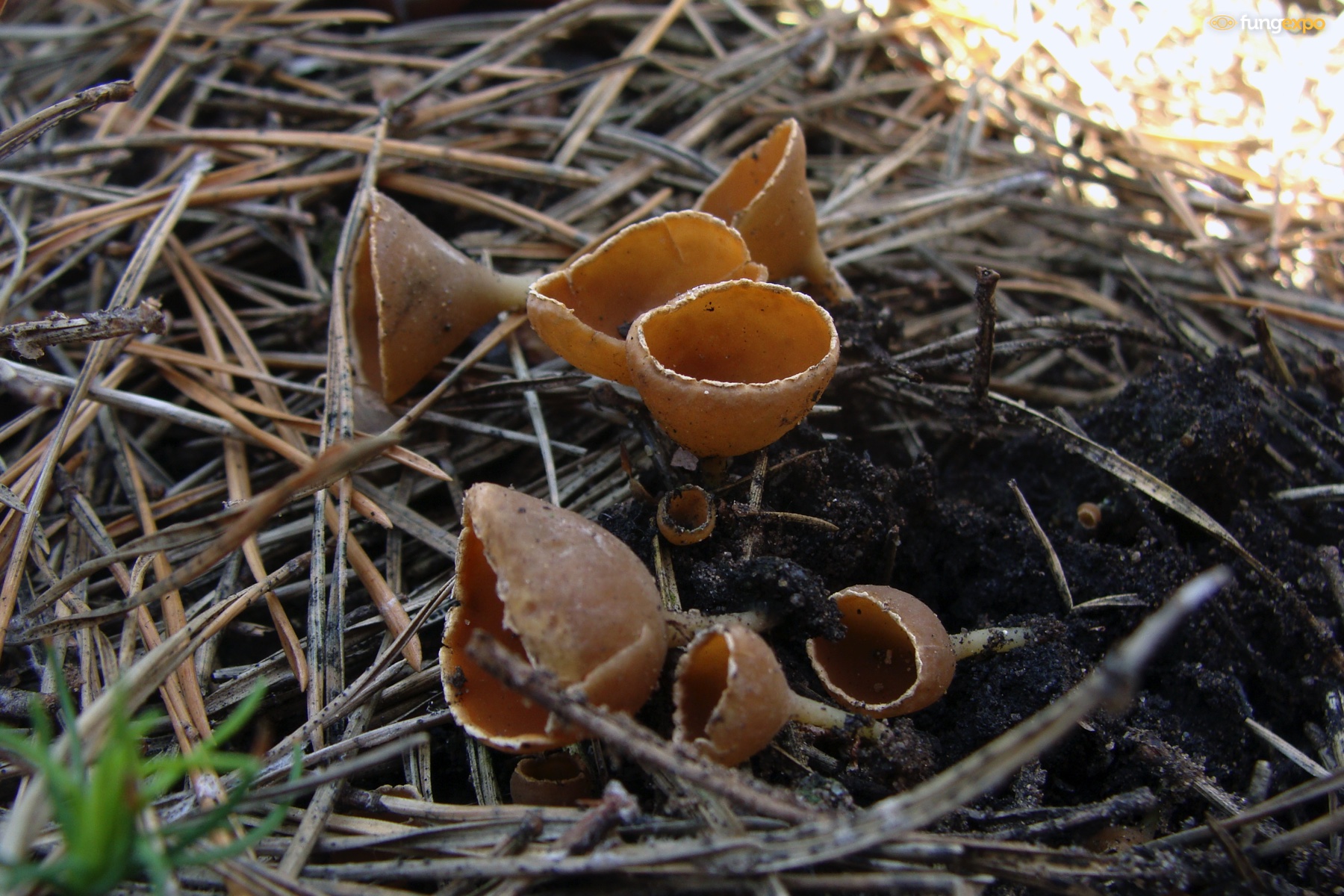
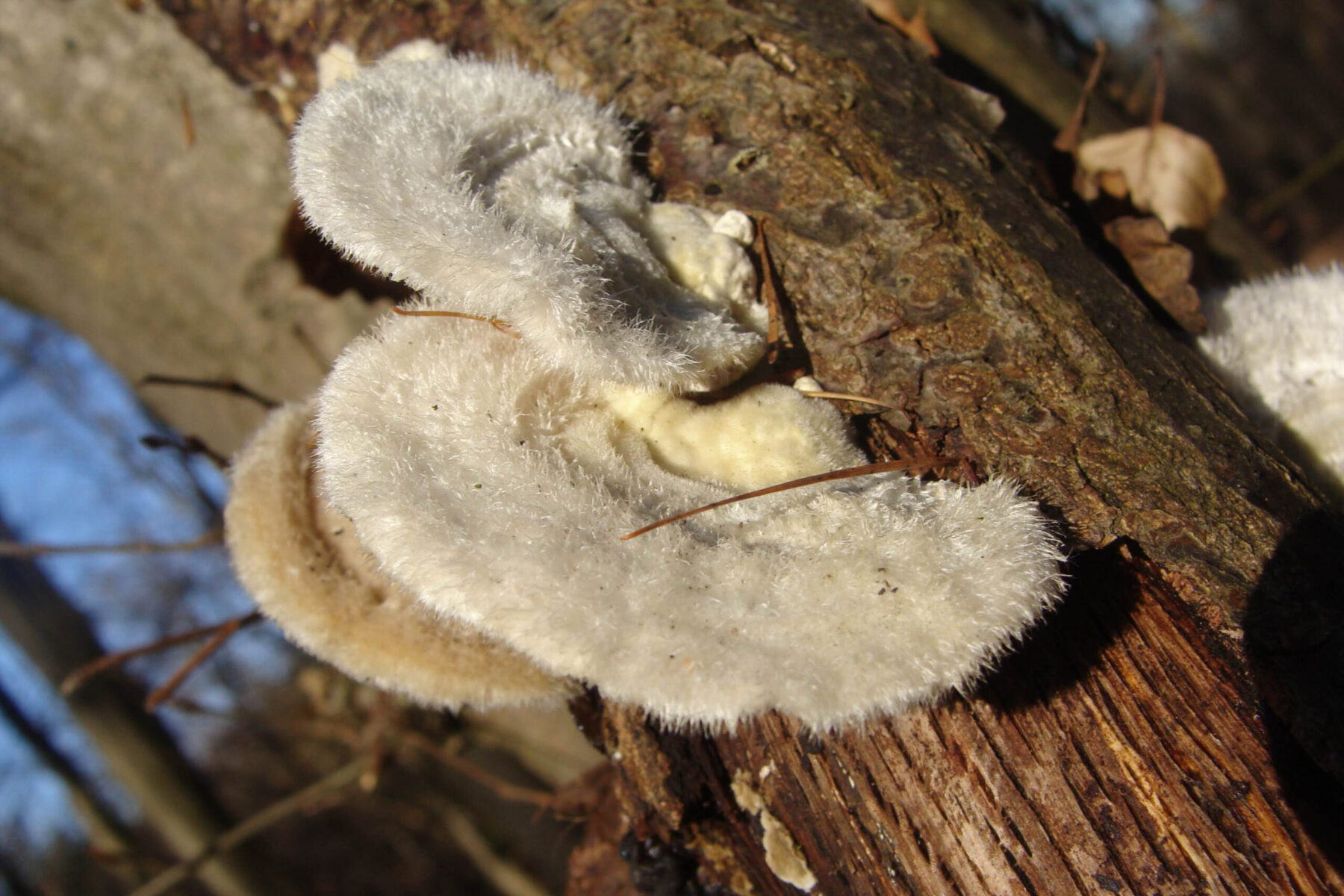
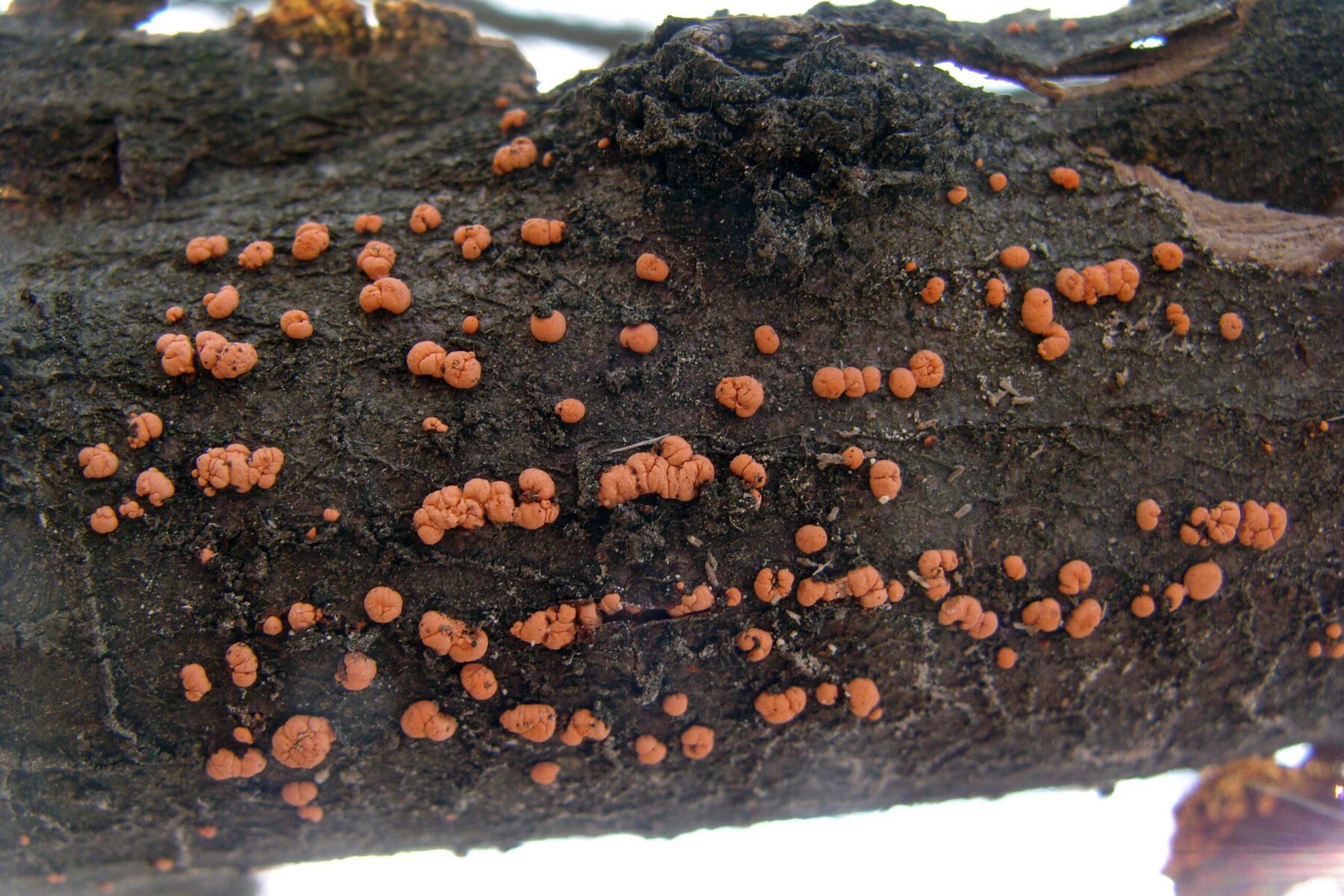
After a relatively long break, we once again surveyed the vast burned forest area near Csönge. In December, the scene was clearly dominated by Anthracobia species, coinciding with the onset of a fruiting wave of Plicaria. By the time we returned in April, the situation had completely changed. The Anthracobia had entirely faded, and in their place, larger pezizoid fungi could be found. Microscopic examination revealed that some of them were Plicaria endocarpoides — remnants of the December flush — in some spots having grown to enormous sizes.
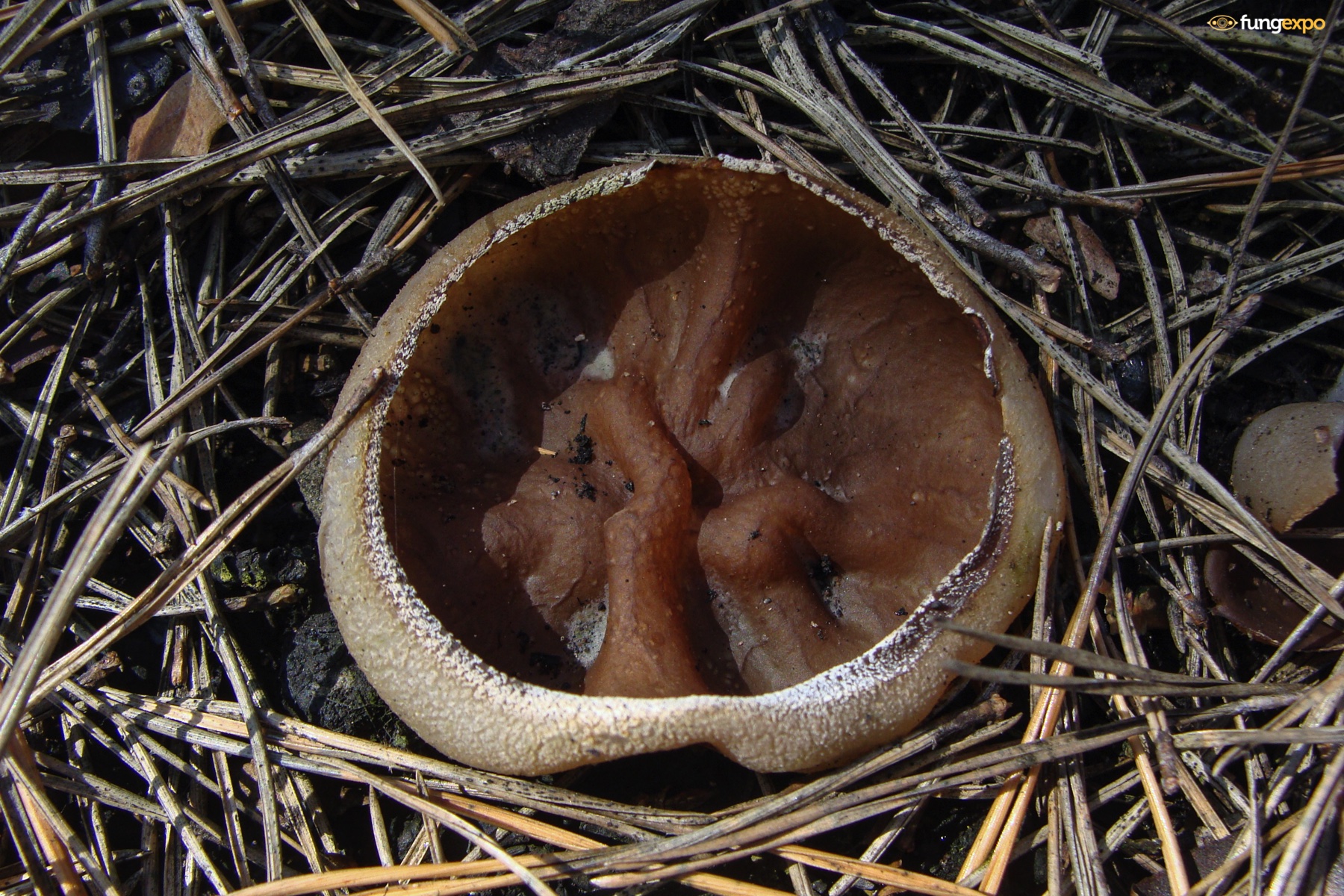
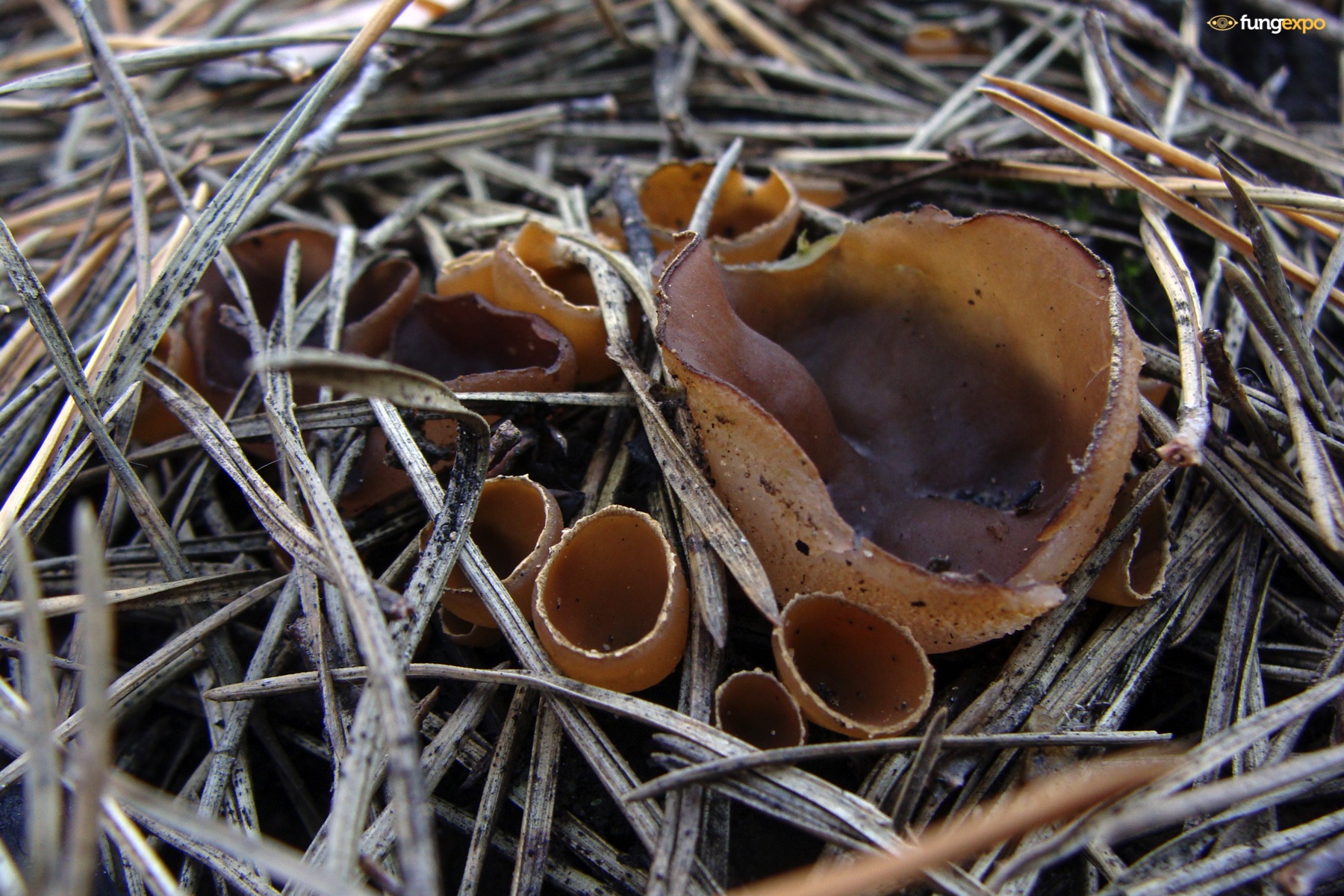
In addition to the previously recorded Geoscypha tenacella, the smooth-spored, less vividly purple but sometimes widely spreading Geoscypha violacea also appeared, with its fragile cup-shaped fruiting bodies.
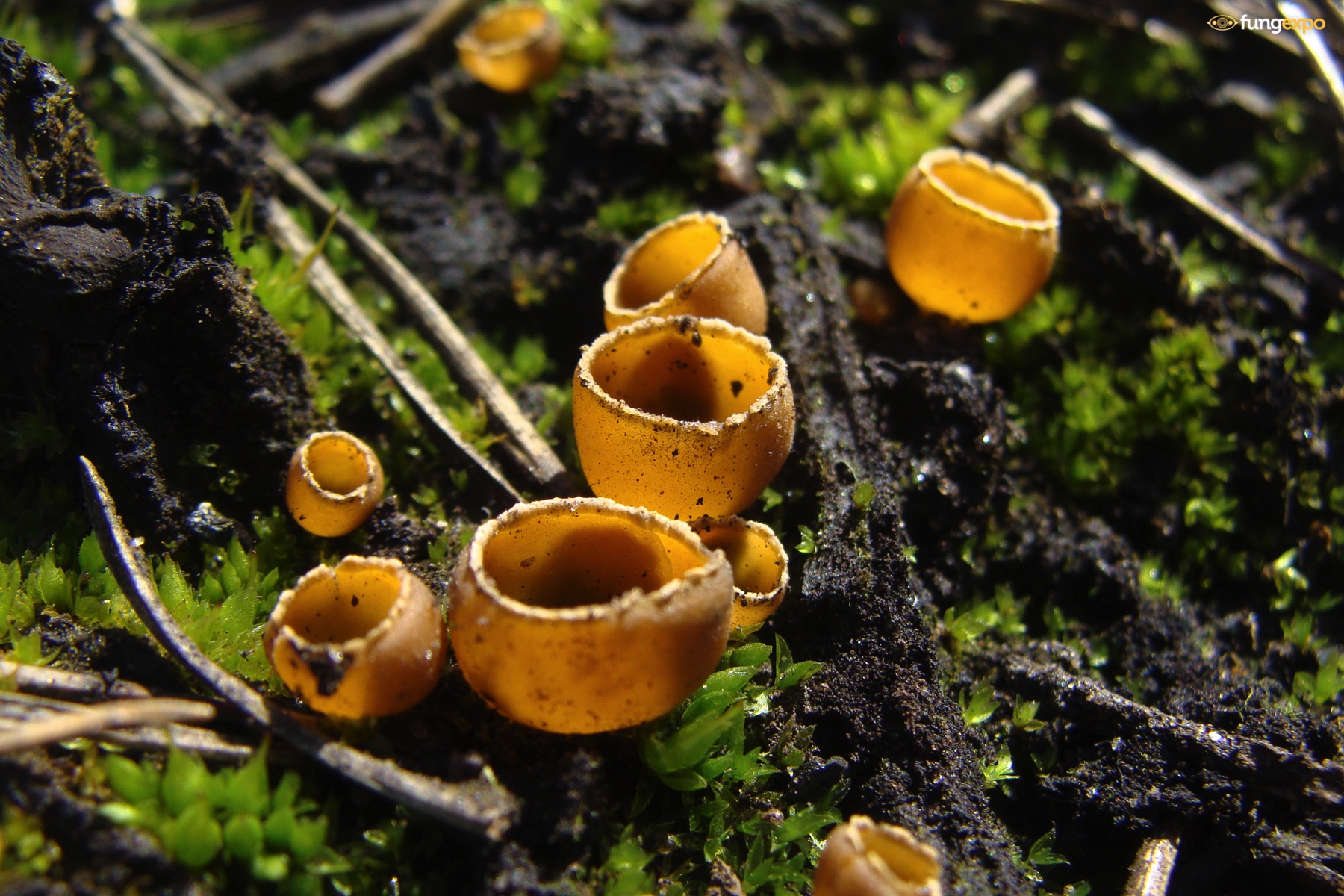
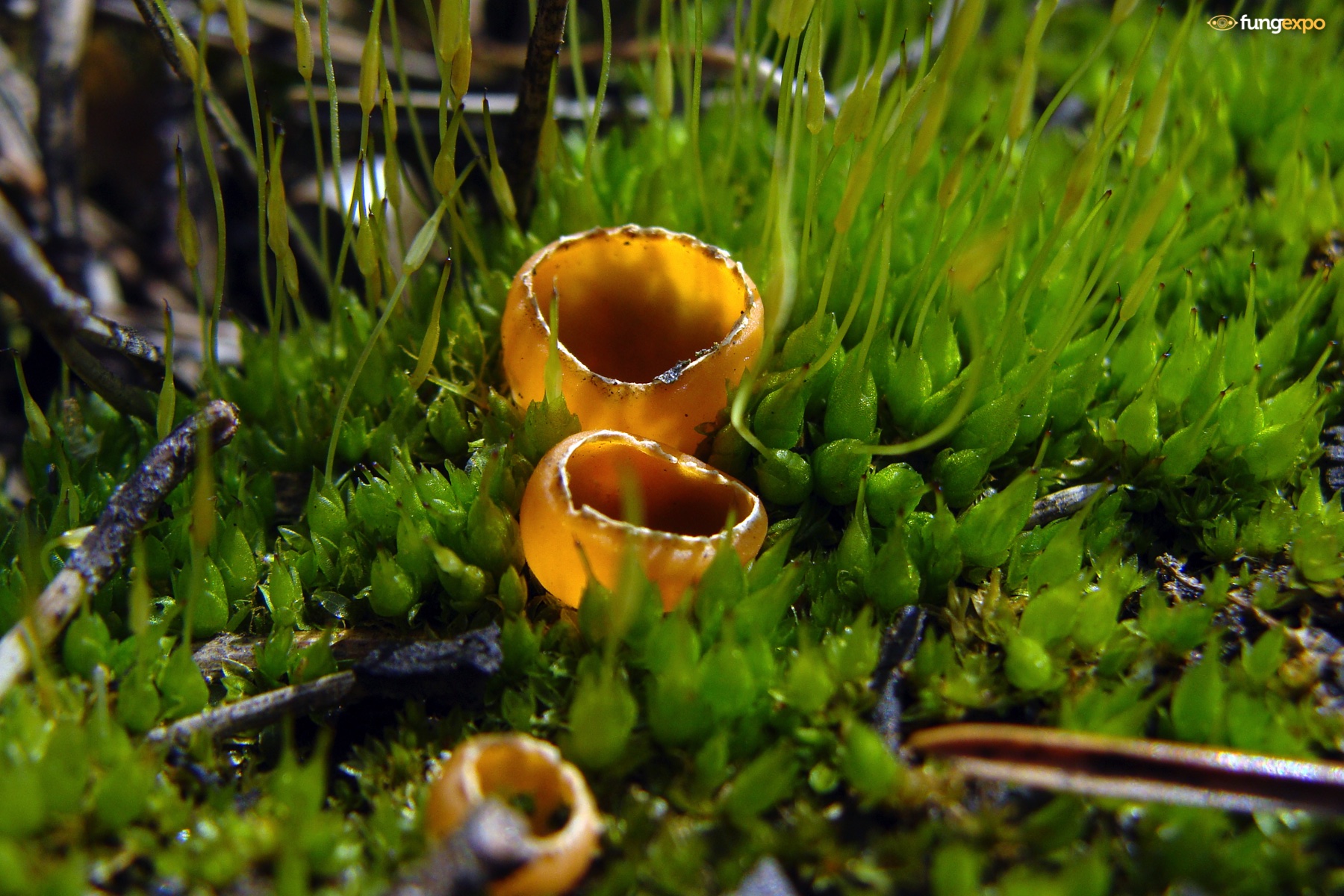
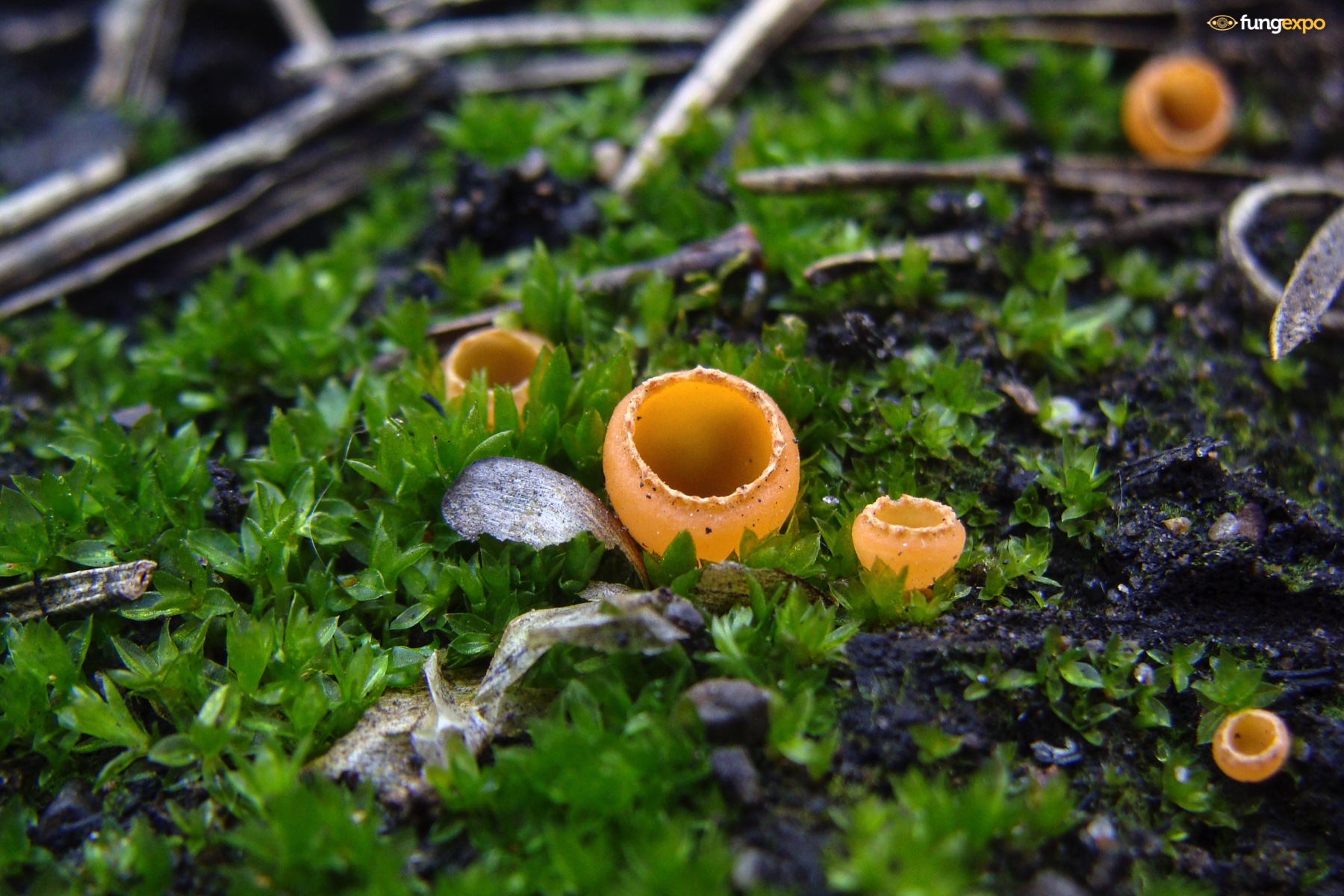
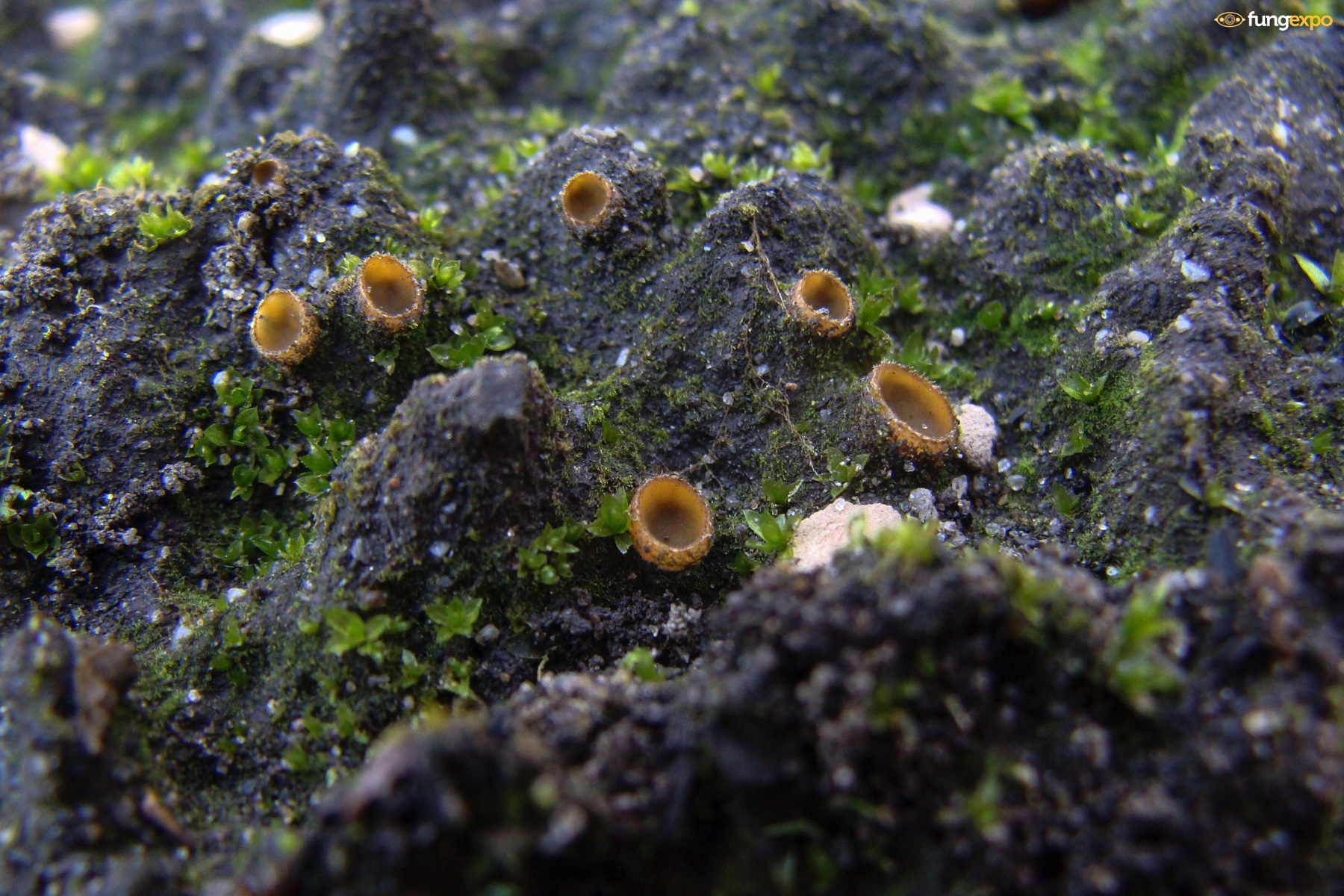
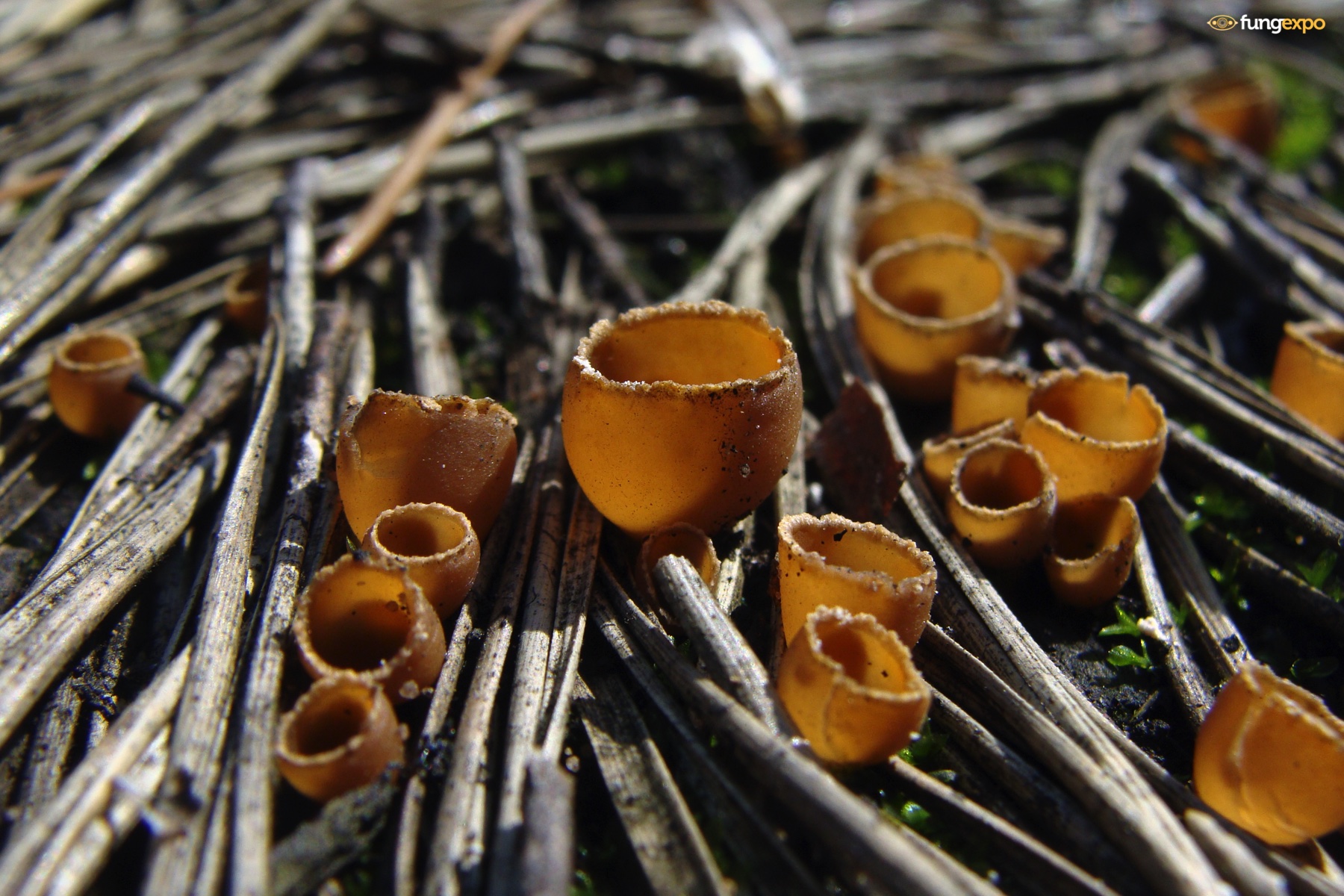
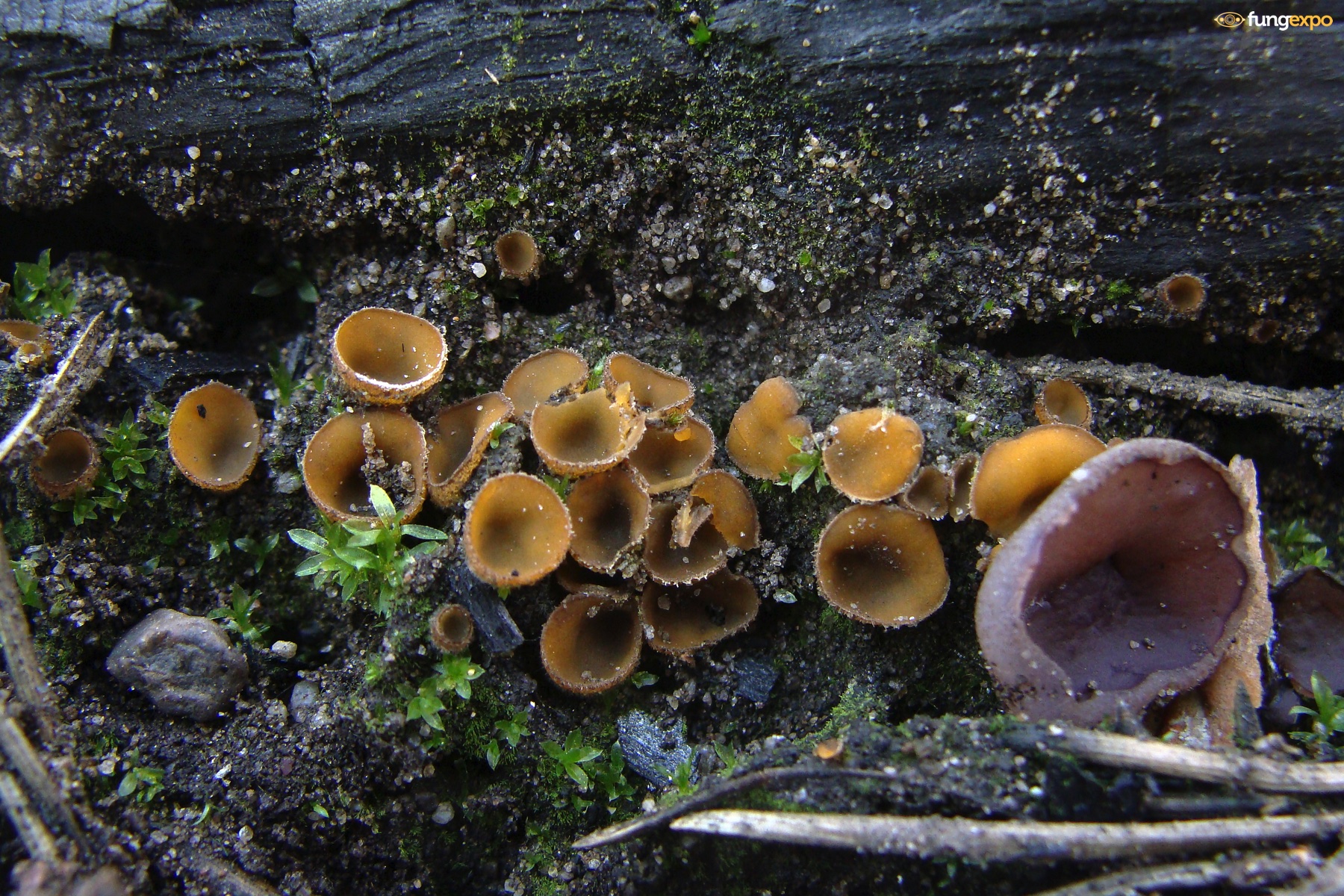
Among the smaller apothecia, Geopyxis carbonaria deserves special attention. We observed its tiny goblets in shades of beige-brown and golden yellow — the latter always growing in moss. As they appear nearly identical under the microscope, it raises the possibility that these are the same species, developing with a different coloration and slightly larger spores in the supportive presence of moss. However, the possibility of a distinct species cannot be ruled out either.
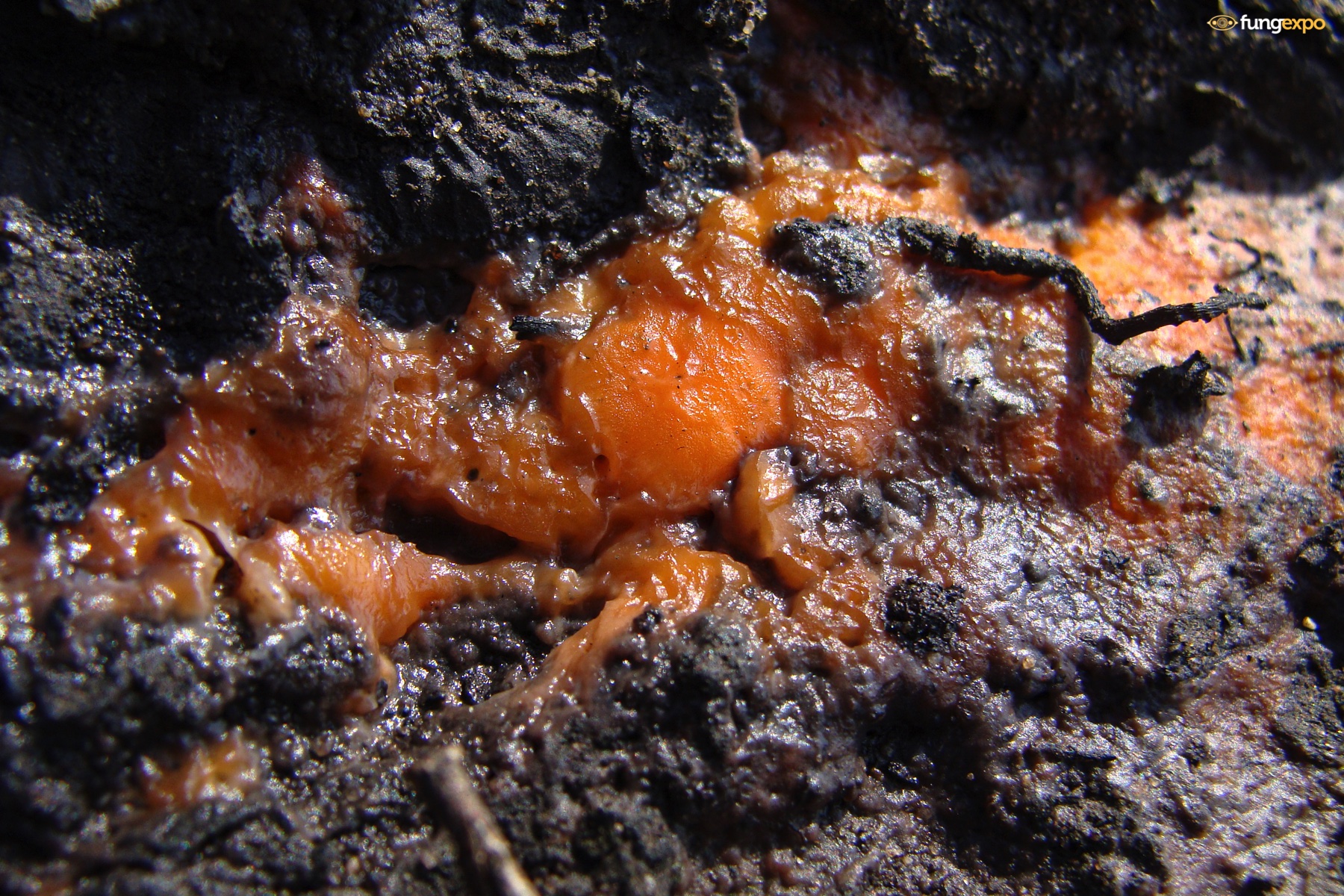
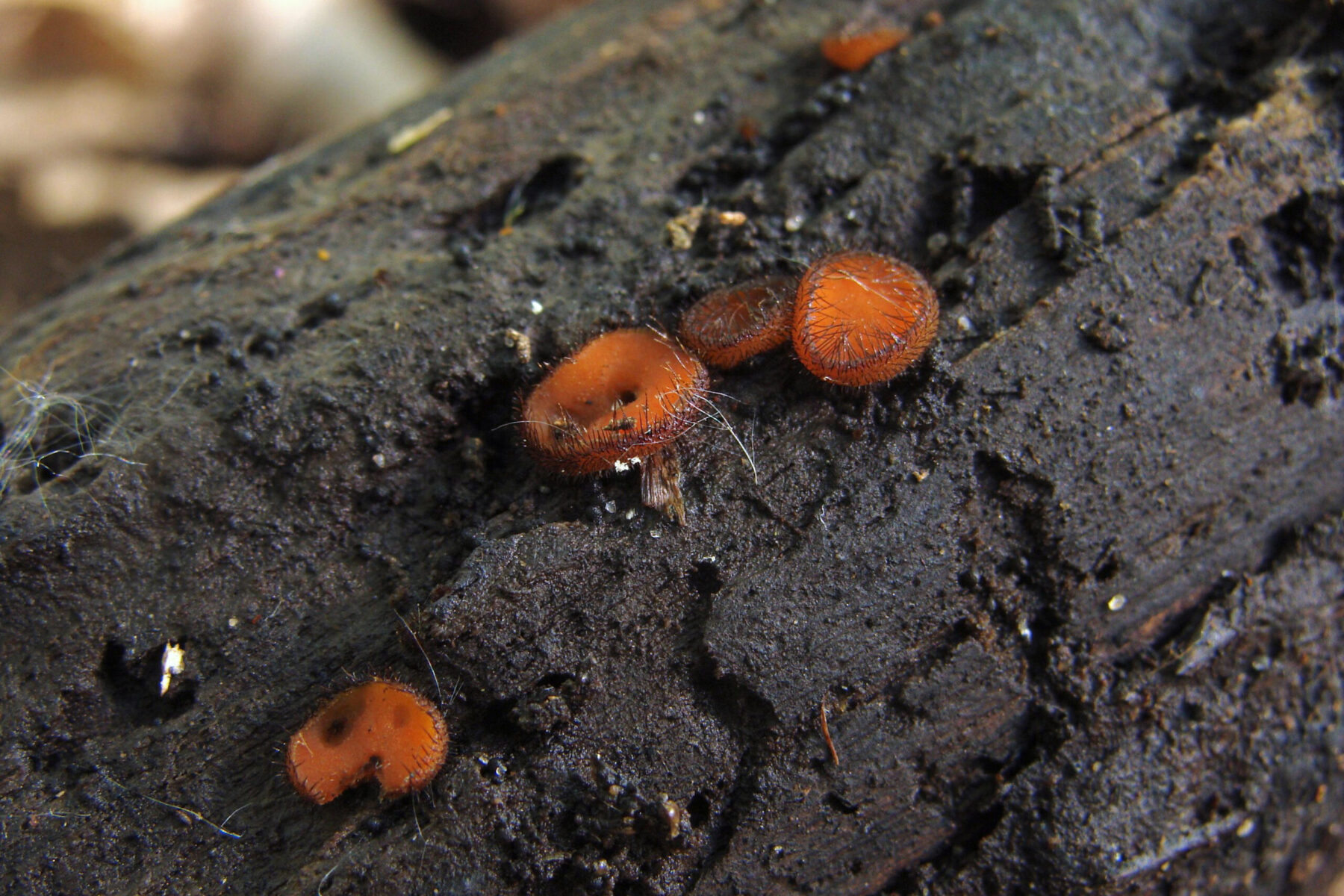
Another delightful find was a moss-dwelling species formerly known as Tricharia, now classified as Ascorhizoctonia praecox. The primordia were first spotted by our friend, Attila Koszka, on a piece of soil just beginning to host moss and mixed with charcoal. Later, I managed to locate a more developed colony containing mature spores.
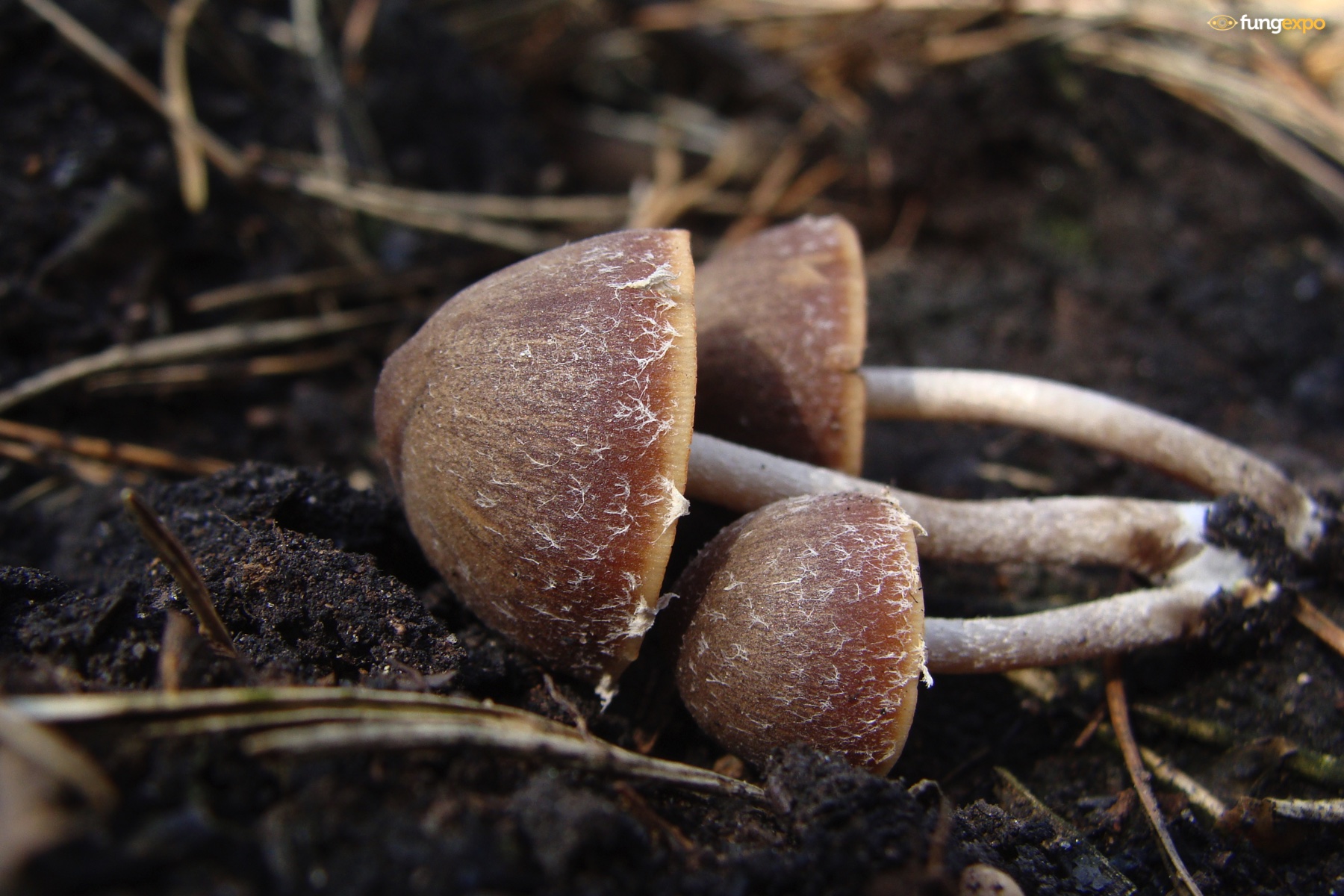
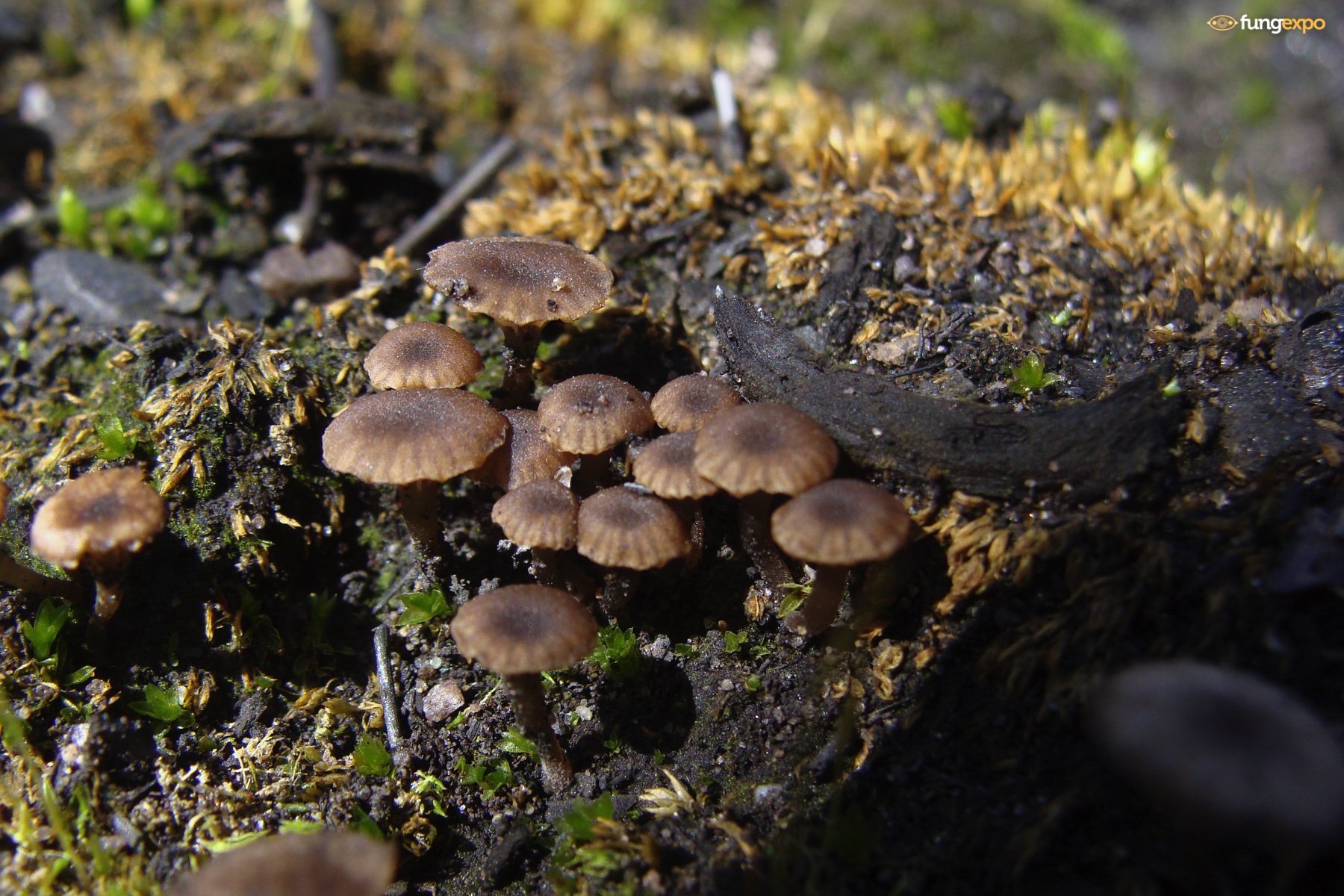
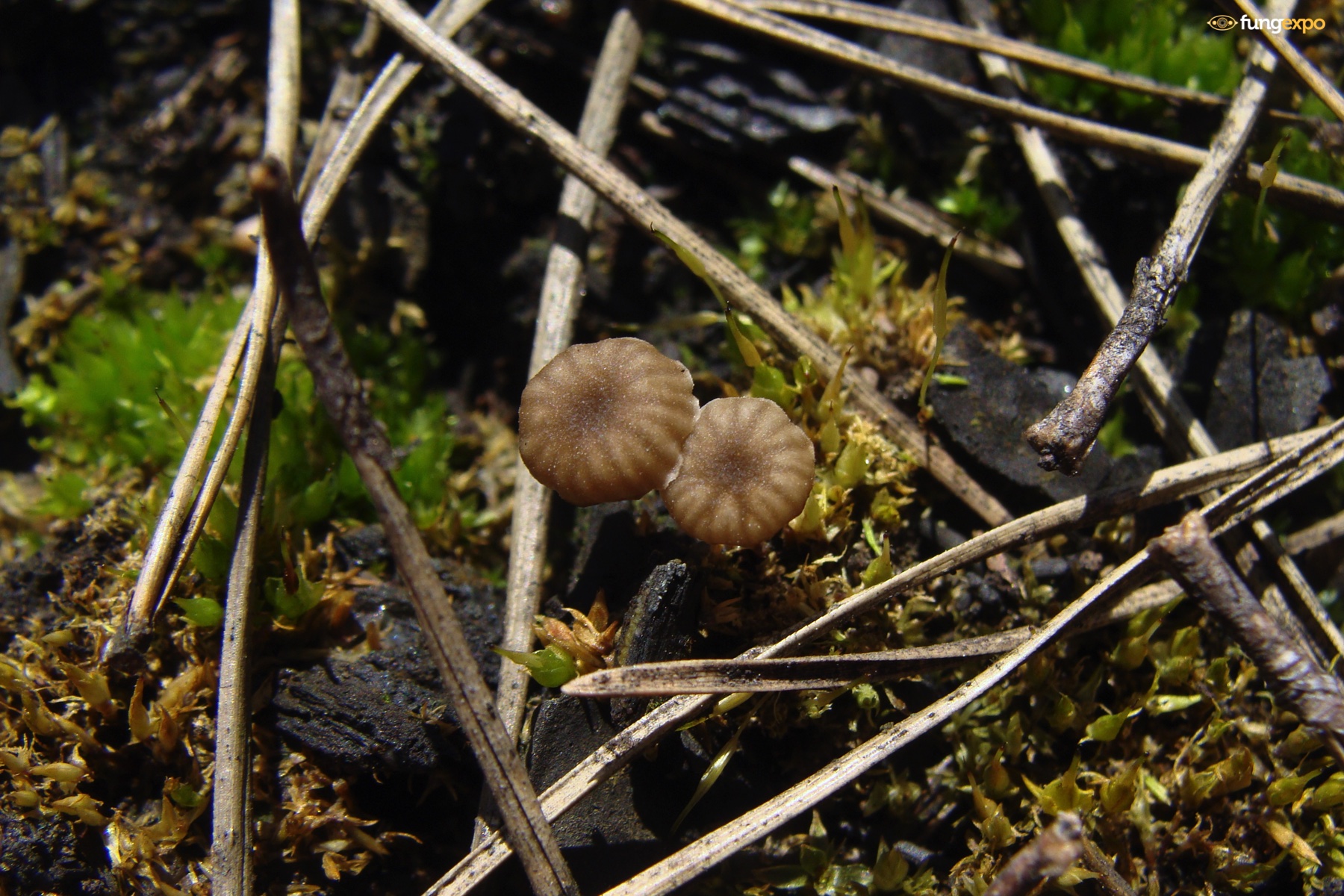
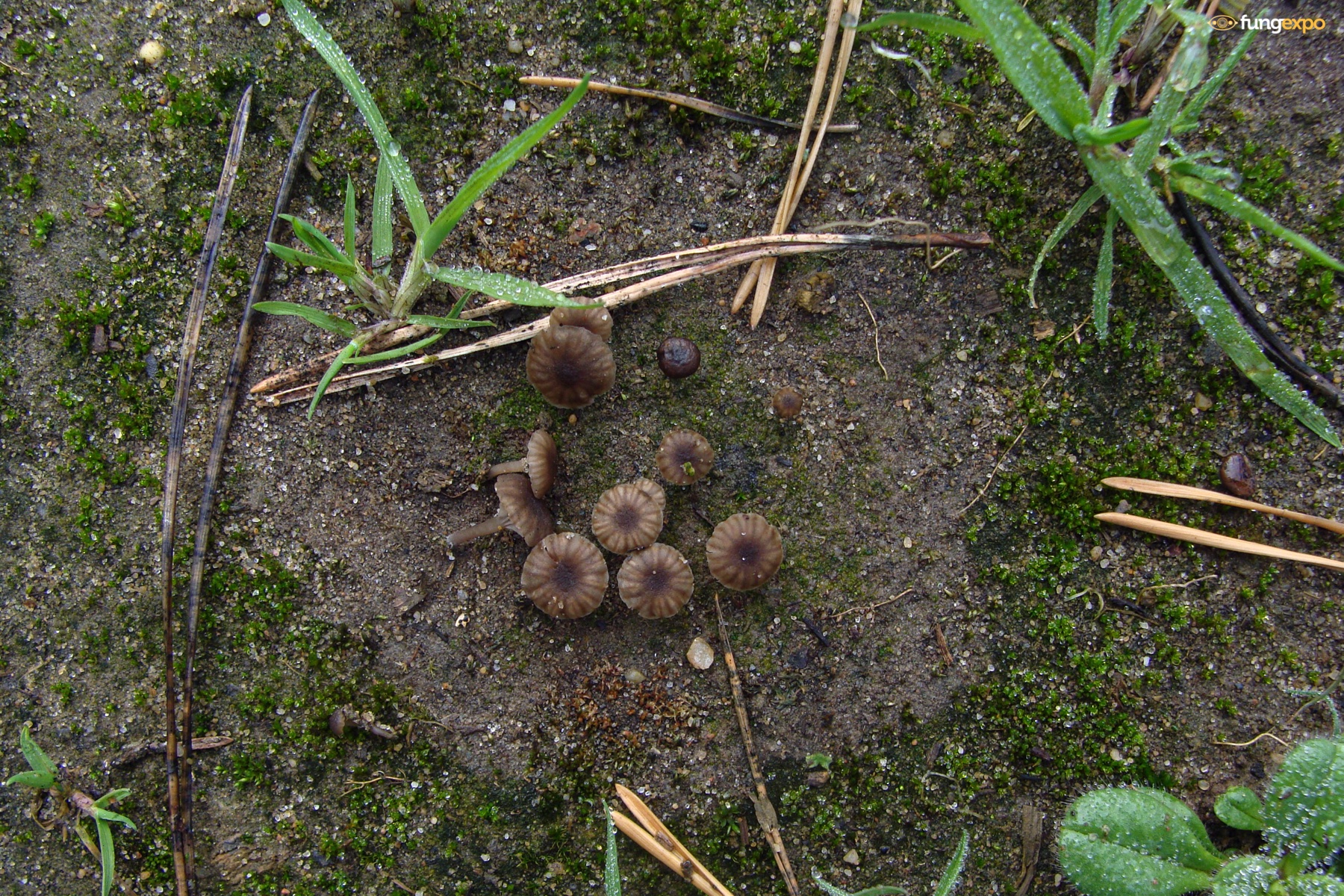
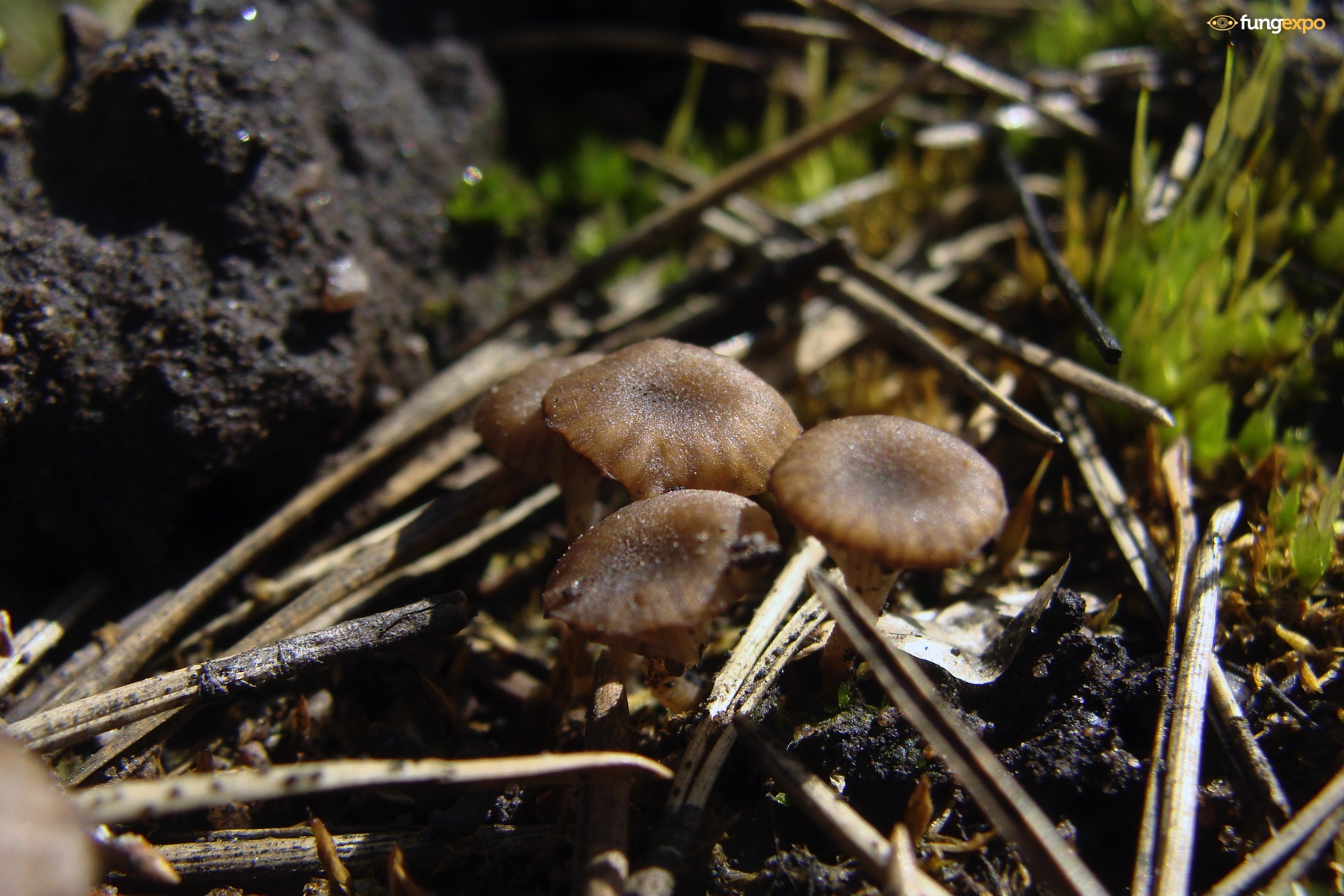
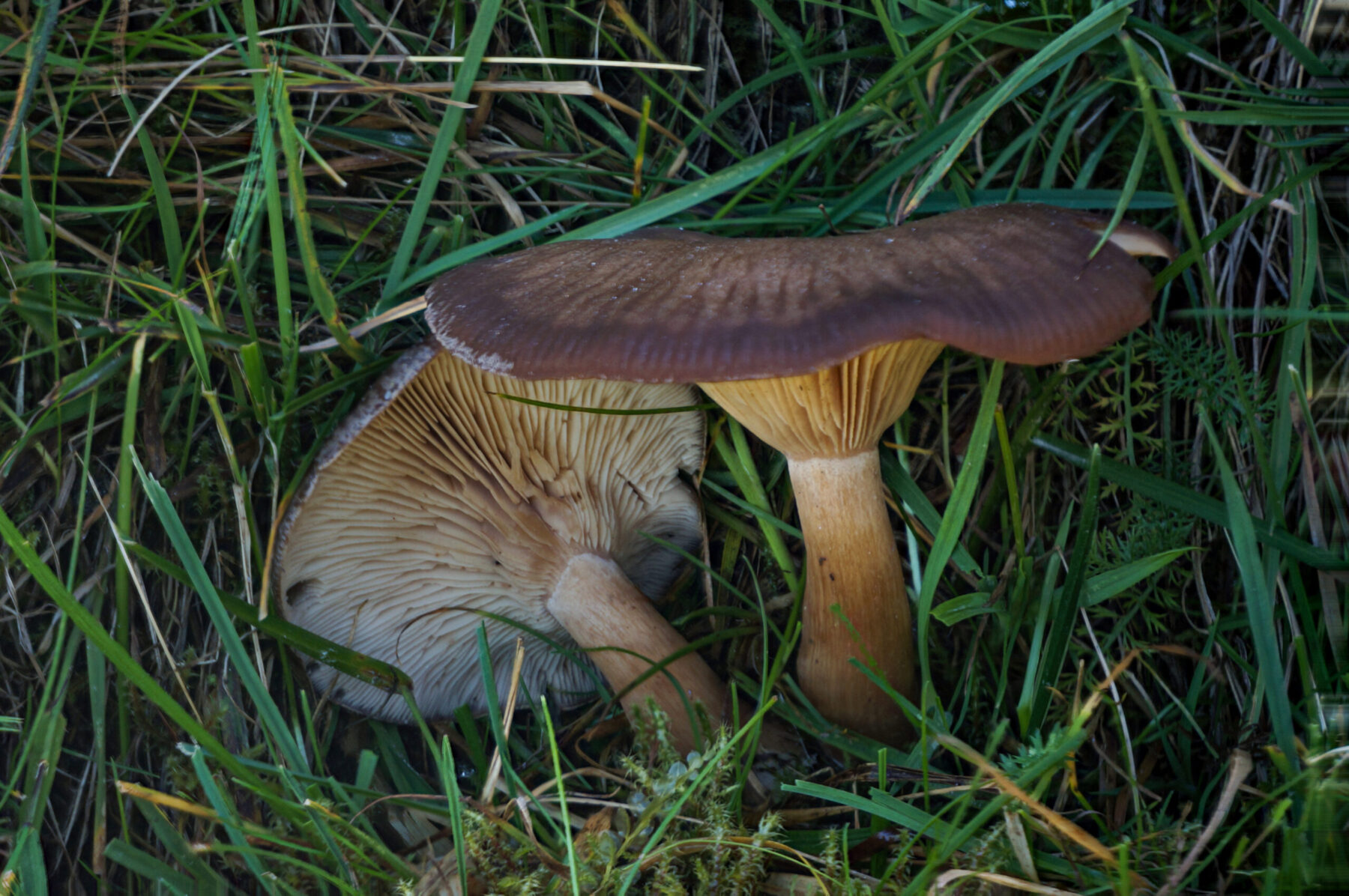
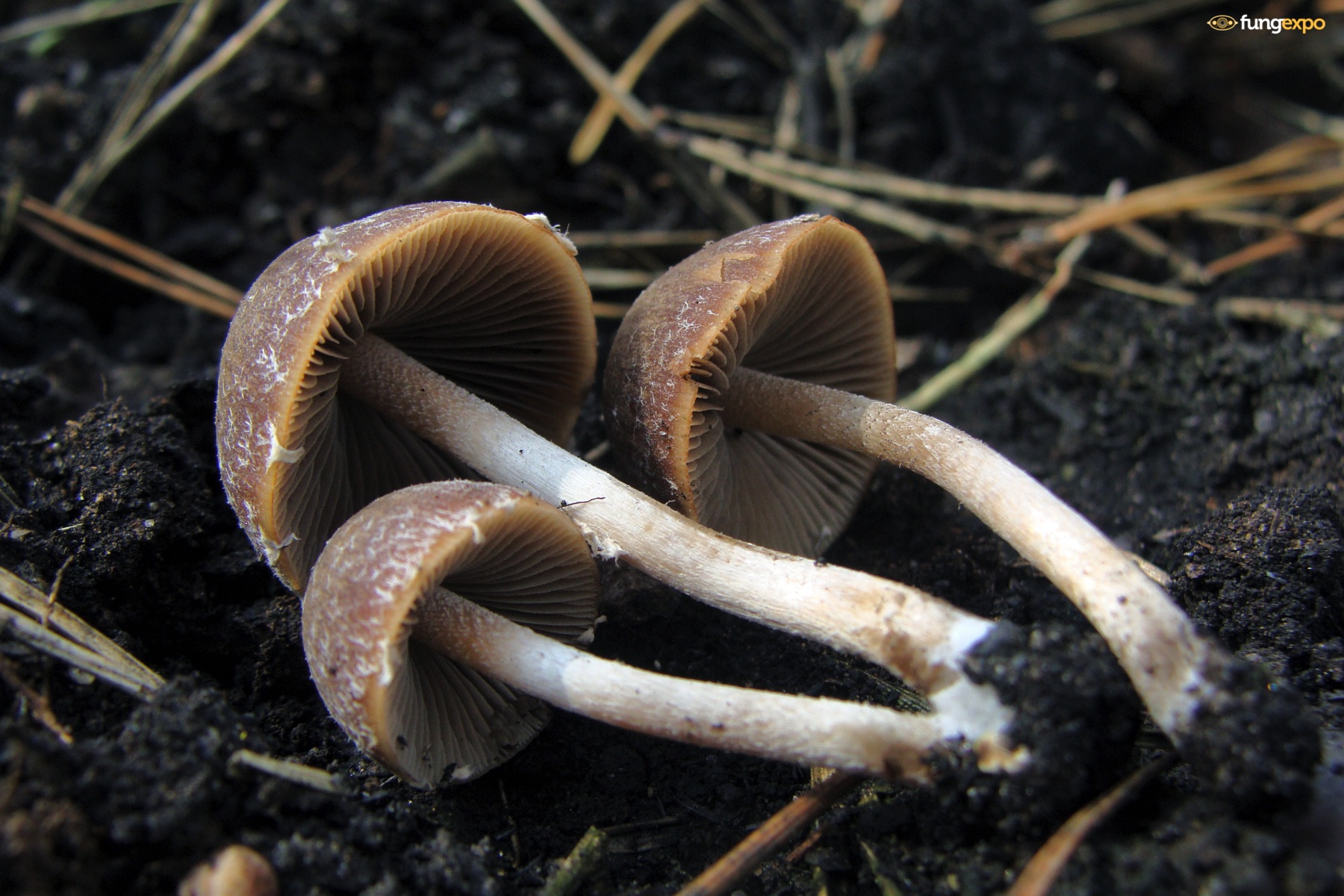
Among the basidiomycetes, we once again observed a species of Arrhenia, already present in December. It is almost certainly the first Hungarian record of Arrhenia bryophthora, the recently described ‘fire-marked’ species from Germany. If all goes well, a genetic analysis will follow (update: in the meantime, the result of the ITS sequencing has confirmed our ID). Another pyrophilous basidiomycete, Psathyrella pennata, was also found.
Unfortunately, it’s not guaranteed that we’ll be able to continue monitoring the area. Our surveys have always been informal, civilian efforts, and in the meantime, logging of the burned trees has begun. During this most recent field visit, we still found some untouched patches, but it’s possible that these remaining trees will soon be removed as well. In any case, we will keep trying.
Some Fungal Finds – April 4, 2025 @ Csönge