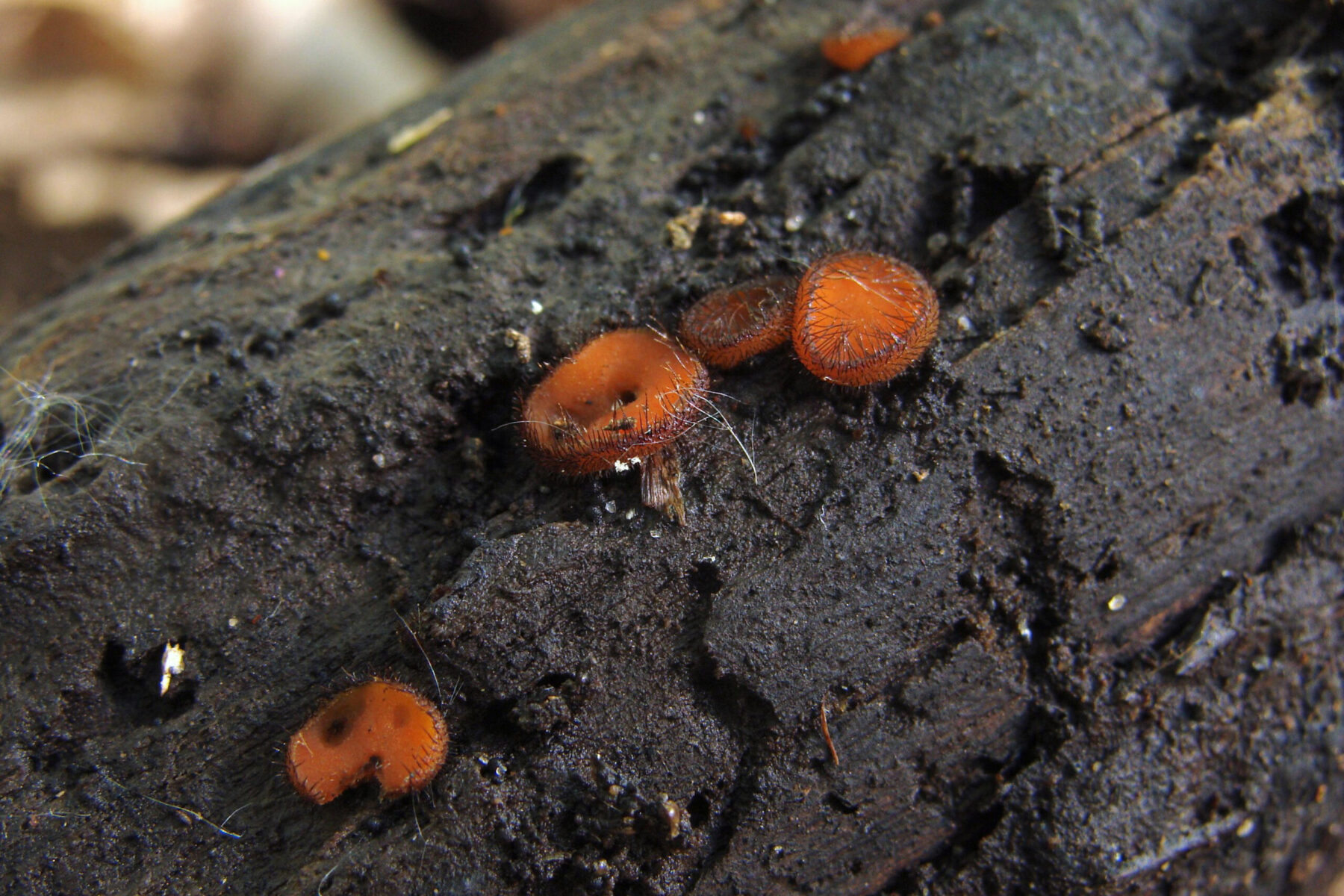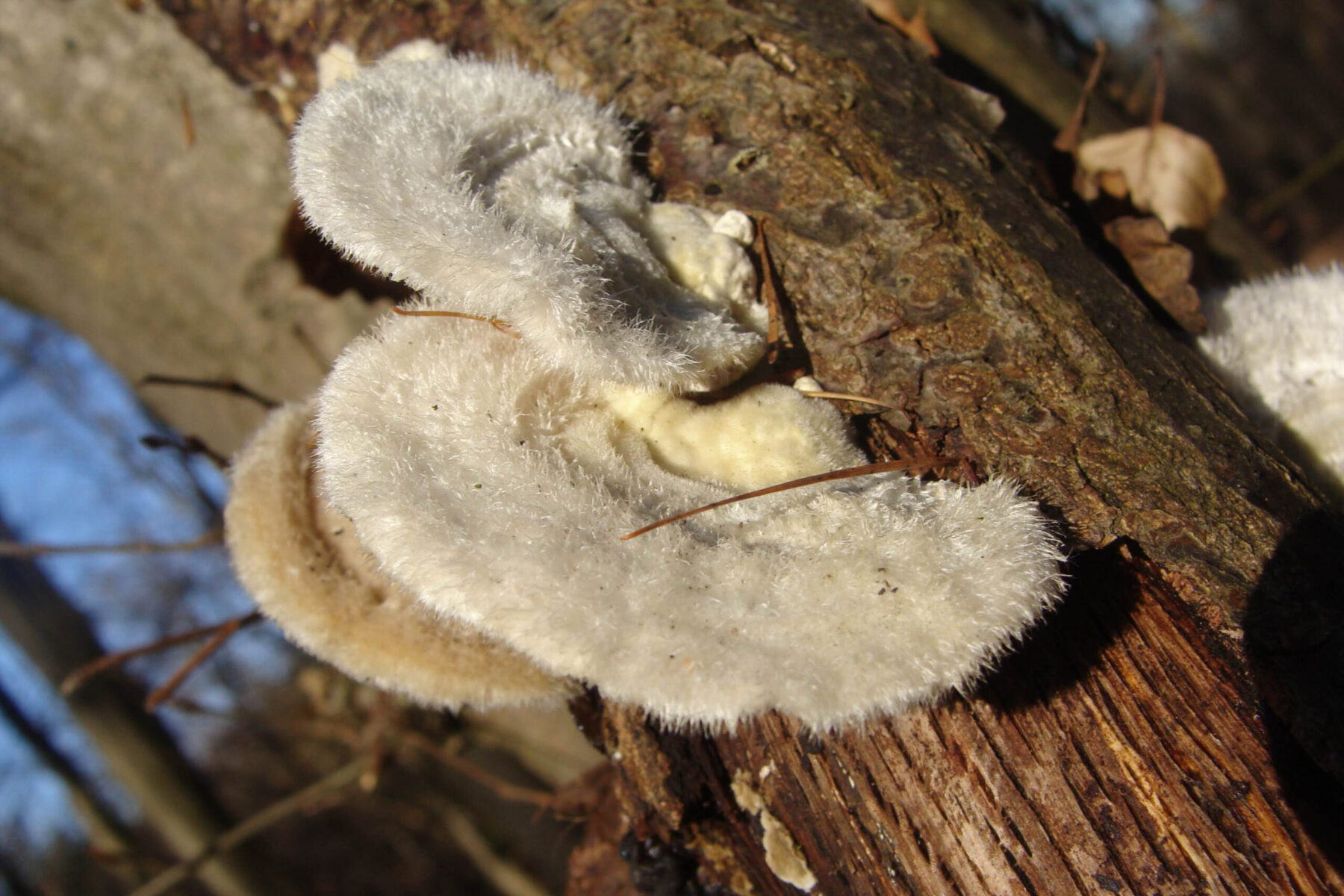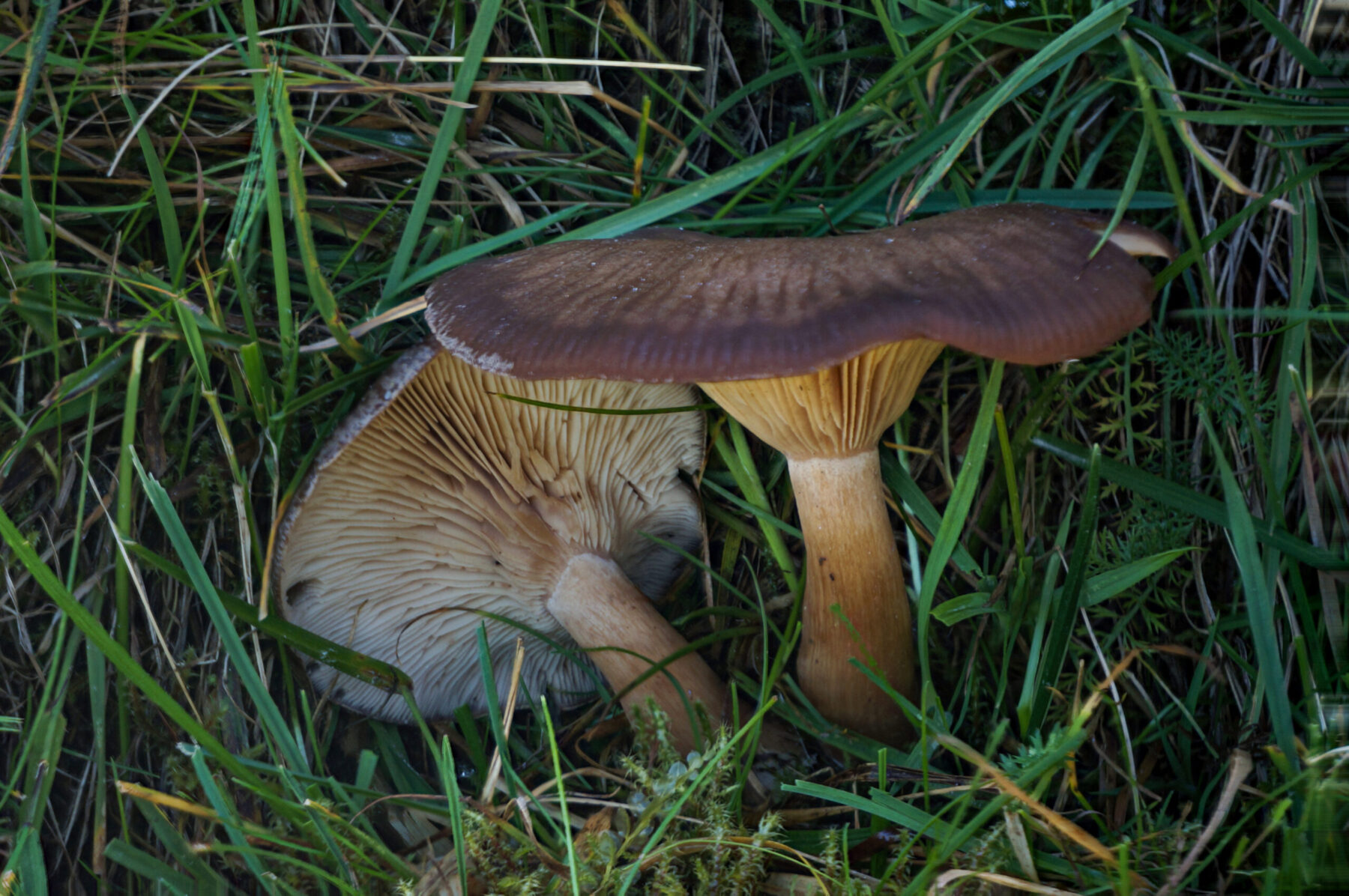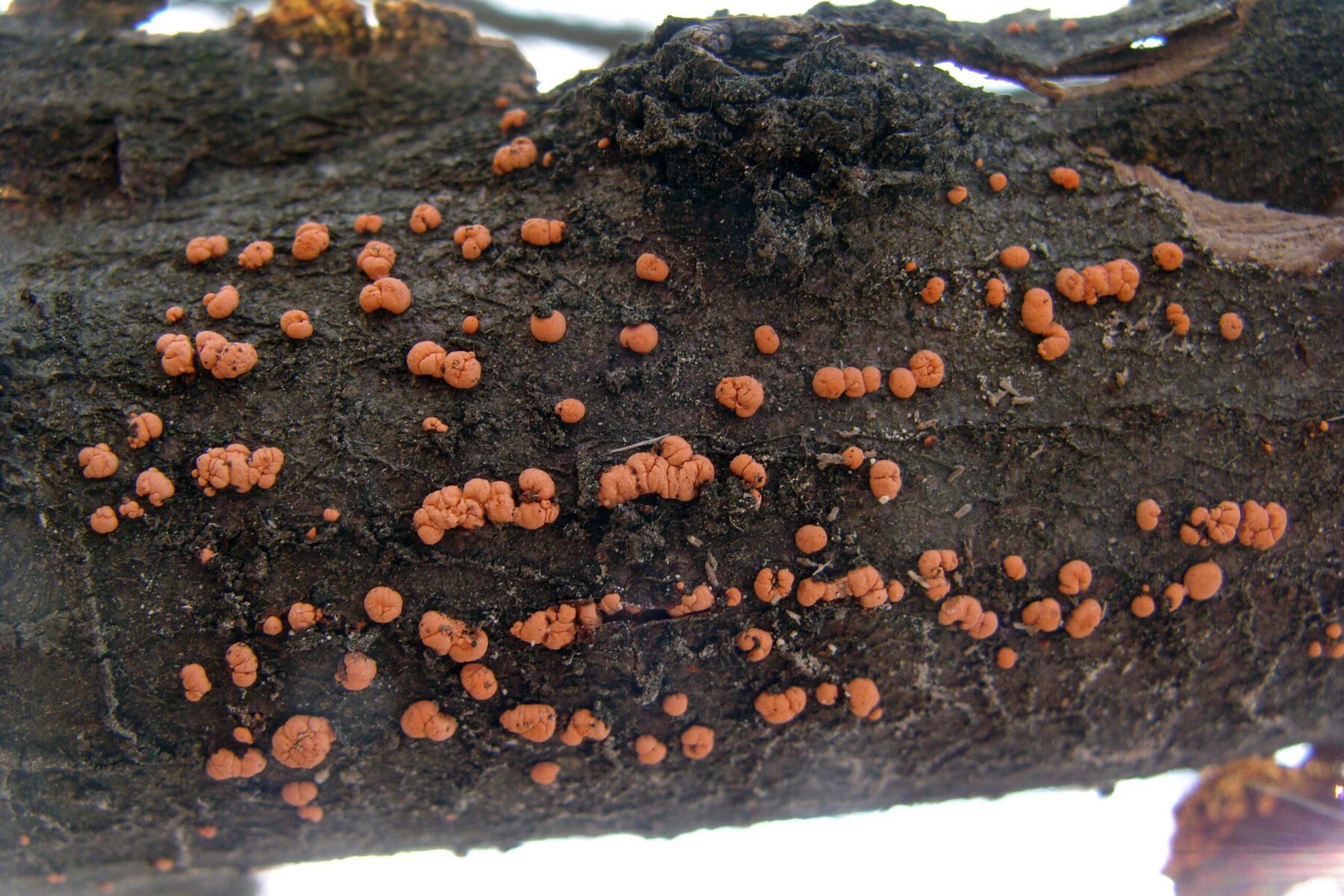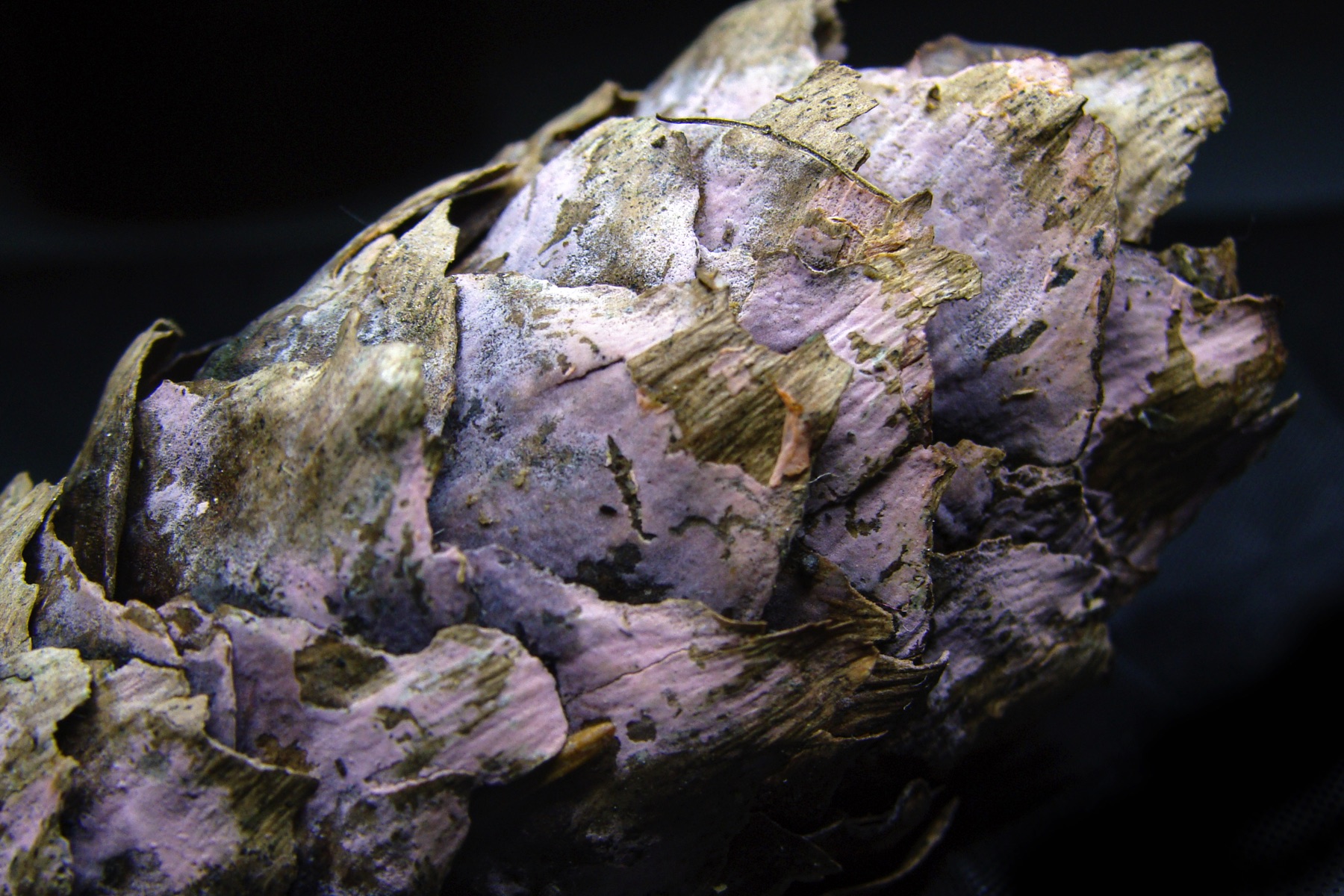
It all started last weekend, when we found a spruce cone with purplish tones on its scales in the Vendvidék region. I liked it so much that I decided to take a closer look, and although I suspected it was a fungus, I would have most likely guessed some hopeless anamorph. Under the microscope, however, it quickly became clear that it was a species of Tulasnella (somewhere around Tulasnella violea – whatever that means taxonomically, but more on that later…).
Bark‑decomposer – or Not?
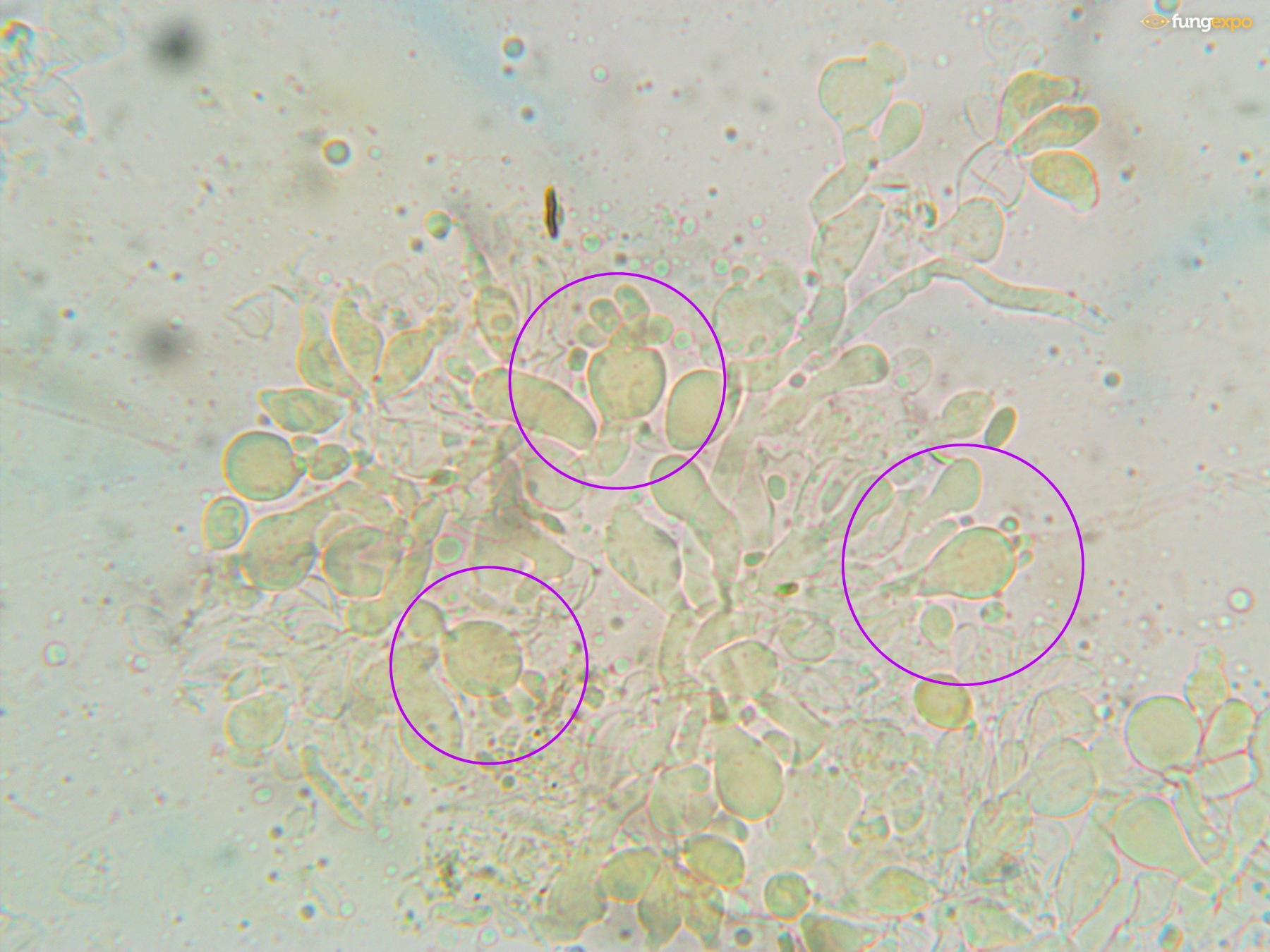
The Tulasnella species with a known teleomorph, visible to the naked eye (for example, Tulasnella violea, known in Hungarian as the “violet bark‑decomposer” — reflecting its typical habitat on decaying bark), share several characteristics. These include a resupinate jelly fruiting body and unicellular, undivided basidia with characteristically swollen, balloon‑shaped sterigmata. Based on these features, it is relatively easy to place them in the genus, and although they may appear to be insignificant little blobs, they form a rather interesting group. Most of the described species in the genus live in orchid mycorrhizal associations (OMF) with certain herbaceous plants, mainly orchids, which is particularly cool and draws some attention due to its relevance for ornamental horticulture.
For Those Who Love Flowers…
Of course, we will never see their association with orchids with the naked eye. Among these species, many appear only in the vegetative, hyphal network stage or as anamorphs (asexual forms) in the roots, and for now we can only infer or hypothesize about the diversity and flexibility of their lifestyle. Enzyme activity studies have shown that the examined Tulasnella species are not solely dependent on their mycorrhizal partners. To some extent, they are also capable of acting saprotrophically, and although still at the level of hypothesis, it is conceivable that some species—detaching from their host plant roots—could emerge on surfaces and, at some point in their life cycle, form teleomorphic, sexually reproducing fruiting body colonies under moist, microclimatic conditions.
From Soil to Decaying Wood?
Since the enzyme activity assays were conducted under laboratory conditions, we cannot yet be certain whether this scenario would also apply to colonies occurring on decaying wood in the wild. Nevertheless, it would be evolutionarily plausible, and the lifestyle flexibility and enzyme repertoire of these fungi could potentially allow such a cycle. Accordingly, the hyphal network penetrating the host plant roots develops into a true mycelium, growing in all directions, including towards the soil surface. The explorative hyphae emerging aboveground—utilizing saprotrophic enzyme activity—search for environmental conditions suitable for teleomorph formation, and once they encounter decaying wood, mulch, plant debris, or a plant reproductive structure (in our case, a cone) with a well-maintained moist microclimate, they colonize it epiphytically and form a teleomorph there. However, based on the weak lignin- and cellulose-degrading enzyme activities measured in the lab, this fungus is unlikely to be a true wood decomposer. It selects wood and plant material primarily for its microclimate, feeding on minor fractions, algae, dust, and humus present on the substrate.
One or the Other…
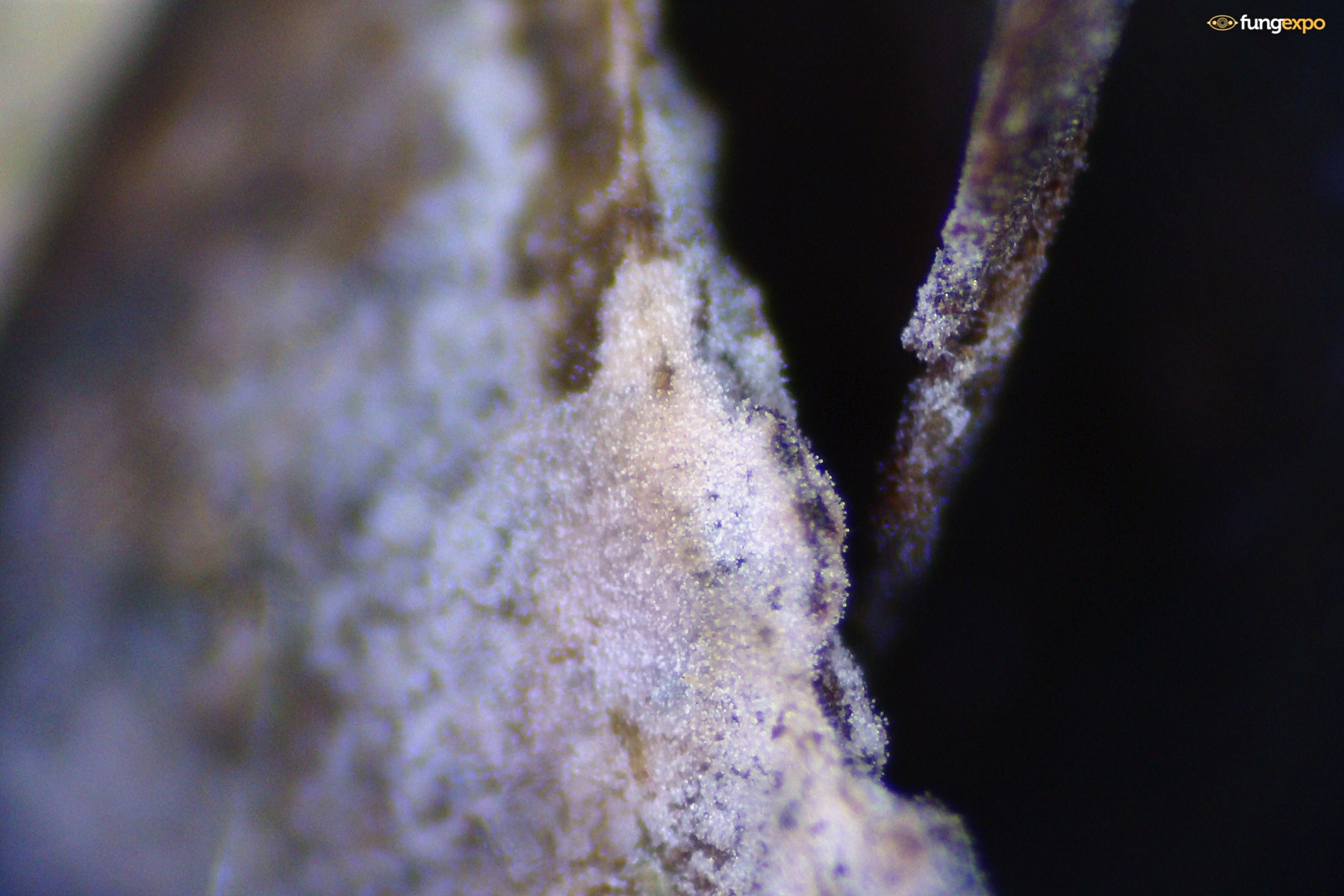
Whether teleomorph-forming Tulasnella species behave this way in the wild, we may find out someday. For now, much remains to be clarified. As with other fungal genera, progress is complicated by the lack of type material for some classical species concepts, making it hard to know exactly which genetic entity a described taxon corresponds to. Even with our own finding, it’s best to be cautious: it represents one of the purplish-pink teleomorph-forming Tulasnella from the violea group. While a few studies specifically report Tulasnella violea from isolates obtained from orchid roots, the taxonomic uncertainty means we cannot take this for granted. In any case, there’s a good chance that the Hungarian name, “violet bark-decomposer,” could be misleading if it turns out that this fungus does not actually survive by decomposing wood.
Related Online Resources:
Extracellular Enzyme Activities and Carbon/Nitrogen Utilization in Mycorrhizal Fungi Isolated From Epiphytic and Terrestrial Orchids
Enzymes of Orchid Mycorrhizae: Nutrient Utilization and Lifestyle Diversity

Large‑scale genome sequencing of mycorrhizal fungi provides insights into the early evolution of symbiotic traits
Fungal Genomes and the Evolution of the Mycorrhizal Lifestyle

Characterization of mycorrhizal fungi of the genus Tulasnella (Tulasnellaceae, Basidiomycota) in the genus of orchids Bletia from Barranca del Cupatitzio Natural Reserve, Mexico
Tulasnella Mycorrhizae on Bletia Orchid Roots: Species Diversity at a Single Site

Integration of fungal transcriptomics and metabolomics provides insights into the early interaction between the ORM fungus Tulasnella sp. and the orchid Serapias vomeracea seeds
Tulasnella sp. and Orchid Seeds: Pre‑mycorrhizal Dialogue Using Omics Approaches

Mycorrhizal Fungi of Phalaenopsis japonica (Orchidaceae) and Their Role in Seed Germination and Seedling Development
The Mycorrhizae of Phalaenopsis japonica: Role in Seed Germination and Seedling Development

A review: Molecular identification of orchid mycorrhiza
Molecular Methods for the Identification of Orchid Mycorrhizae

Isolation of Tulasnella spp. from Cultivated Paphiopedilum Orchids and Screening of Germination‑Enhancing Fungi
Tulasnella Isolates from Paphiopedilum Cultivations and Germination‑Enhancing Fungi